
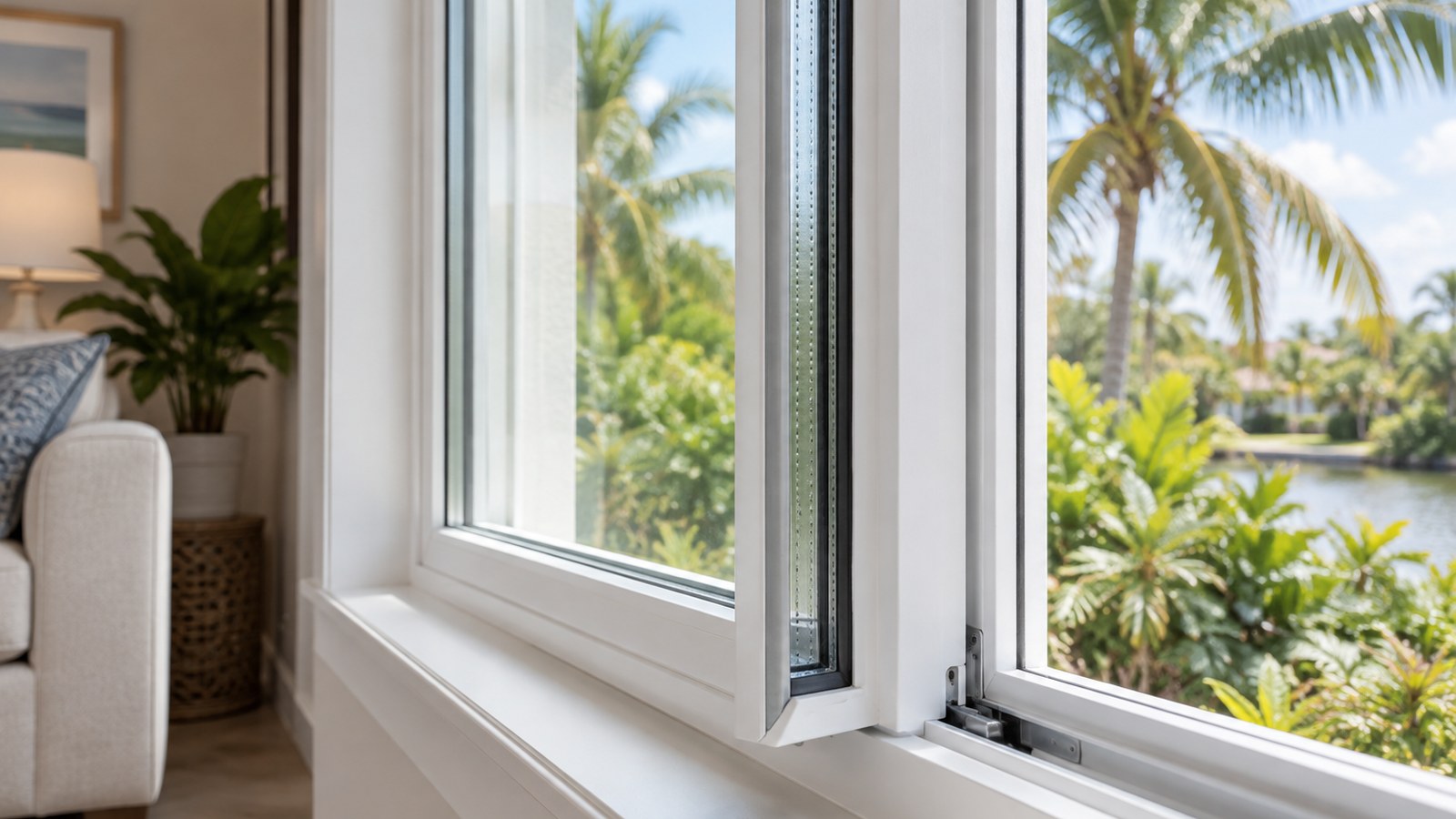
Replacing windows in Florida is not the same project it is elsewhere. Gulf Coast homes deal with intense sun, high humidity, wind-driven rain, and hurricane season, and the window that performs well in a mild climate may be the wrong specification here. If you are planning window replacement near Pasco County, these are the features worth understanding before you compare quotes.
Start With the Florida Building Code
Windows installed in Florida must meet the requirements of the Florida Building Code for the wind zone and exposure at your address, and products are generally documented through state or local approval. You can verify a specific product's approval through the state's Florida Product Approval search. Requirements differ by location, so confirm what applies to your home with your local building department rather than assuming a neighbor's specification carries over.
Impact-Rated Glass vs. Standard Glass
Impact-rated windows use a laminated glass assembly designed to stay in the opening after being struck, which keeps the building envelope closed during a storm. Standard insulated glass is not designed for that. The alternative to impact glass is an approved shutter or panel system that covers standard windows before a storm. Both approaches exist to satisfy opening protection requirements; the choice usually comes down to whether you want protection that is always in place or protection you deploy.
Laminated vs. Tempered Glass
Laminated glass bonds an interlayer between two panes, so it holds together when broken. Tempered glass breaks into small blunt pieces and is required in certain locations such as doors and low-height openings. Laminated assemblies also tend to reduce outside noise and block a large share of UV, which is why they are common in coastal replacement projects.
Low-E Coatings for Florida Sun
Low-emissivity coatings are microscopically thin layers that reflect a portion of solar heat while letting visible light through. In a cooling-dominated climate, the goal is to reject heat without making rooms dark. The ENERGY STAR program, run by the U.S. EPA and Department of Energy, is a useful neutral reference for comparing window energy performance.
The Three Numbers on the Label
Most residential windows carry an NFRC label. The National Fenestration Rating Council defines what each number means.
| Rating | What it measures | Why it matters in Florida |
|---|---|---|
| U-Factor | Heat transfer through the window; lower is better | Matters, but less than SHGC in a cooling climate |
| SHGC | Fraction of solar heat that gets through; lower blocks more | Usually the most important number for Gulf Coast homes |
| Air Leakage | Air passing through the assembly | Affects comfort, humidity control, and dust |
Frame Materials Compared
- Vinyl. Common, low maintenance, good thermal performance, widely available in replacement sizes.
- Fiberglass. Strong and dimensionally stable, typically a higher-cost option.
- Thermally broken aluminum. Strong and slim-profiled, with an insulating break to reduce heat transfer compared with older solid aluminum frames.
Older single-pane aluminum windows without a thermal break are what many Florida replacement projects are removing.
Design Pressure Ratings
Design pressure, often shown as DP, describes the structural load a window is tested to withstand. The required rating depends on the wind speed, exposure category, building height, and the location of the opening on the wall. A qualified installer or your building department can confirm what the openings on your home require. Treat any rating claim as something to verify on the product label and approval documentation.
Window Styles for Coastal Homes
- Single-hung: the most common replacement style, with the lower sash operating.
- Double-hung: both sashes operate, which can simplify cleaning.
- Casement: cranks outward and seals tightly when closed.
- Horizontal slider: practical for wide openings and easy to operate.
Style affects ventilation, cleaning, egress, and how much of the opening is glass rather than frame.
Screens and Ventilation
Screen mesh choice is a small decision with a daily impact. Finer mesh blocks smaller insects and more pollen; heavier mesh resists pet damage. If you plan to open windows during mild months, confirm the operable area and screen type that come with the product line you are considering.
Sound Control
Laminated glass and thicker or asymmetric glazing packages usually reduce traffic and outdoor noise noticeably. Ratings such as STC and OITC describe this performance, with OITC being the more relevant measure for low-frequency exterior noise. If your home faces a busy road, ask for the specific ratings of the exact glass package.
Water Management
Most window leaks trace back to installation details rather than the window itself. Sloped sills, functioning weep holes, correct flashing sequence, and the right sealant for the substrate all matter. Weep holes need to stay clear, which is a simple maintenance item homeowners can handle.
UV and Fade Resistance
Laminated and Low-E glazing reduce the ultraviolet light that fades flooring, fabrics, and artwork. No glass eliminates fading entirely, since visible light contributes too, but the reduction is meaningful in rooms with long sun exposure.
Security and Hardware
Look at lock type and count, sash reinforcement, and whether the hardware is rated for coastal use. Multi-point locking and integrated night latches are available on many lines. Corrosion resistance matters more the closer you are to the water.
Installation Done Right
A quality window installed poorly will underperform. The essentials are a properly prepared opening, correct fastener type and spacing per the product's approval, integrated flashing, appropriate low-expansion insulation, and sealed exterior joints. Ask any contractor how they handle flashing and fastening, and whether they follow the manufacturer's installation instructions referenced in the product approval.
Retrofit vs. Full-Frame Replacement
Retrofit installation keeps the existing frame and is less invasive. Full-frame replacement removes everything back to the rough opening, which is the better option when the existing frame is damaged, when water intrusion is suspected, or when the new product requires it. The condition found during an on-site inspection should drive that decision.
Warranties
Warranty terms differ by manufacturer, product line, and component. Glass, hardware, finish, and labor are often covered differently, and some coverage depends on registration or on installation by an approved installer. Ask for the written warranty document for the exact product rather than a verbal summary.
Permits and Inspections
Window replacement generally requires a permit in Pasco, Pinellas, and Hernando Counties, along with inspection at completion. Requirements and fees are set locally, so confirm current details with Pasco County, Pinellas County, or Hernando County, or with your city if you are inside municipal limits. If you are in an HOA, check architectural rules on frame color and grid patterns.
Energy and Comfort Expectations
Replacing older single-pane windows with modern insulated units generally improves comfort near windows and reduces solar heat gain. Actual utility savings depend on your home, insulation, air sealing, equipment, and habits, so be cautious of any specific savings percentage promised up front.
Mistakes to Avoid
- Choosing a glass package on price alone without checking SHGC
- Assuming any product meets local wind requirements
- Skipping the permit
- Ignoring flashing and sealant details in the proposal
- Comparing quotes that do not list the same product, ratings, and scope
Local Checklist
For homes in Holiday, New Port Richey, Trinity, Spring Hill, Brooksville, Clearwater, and the surrounding Pinellas, Pasco, and Hernando communities, prioritize low SHGC, an appropriate design pressure rating for the opening, corrosion-resistant hardware near the coast, and an installation that documents flashing and fastening.
What to Expect From the Project
- On-site measurement of every opening and review of existing conditions
- Product and glass package selection with the ratings written down
- Proposal, order, and manufacturing lead time
- Permit application
- Installation, typically completed opening by opening
- Inspection and final walk-through
Frequently Asked Questions
Do I need impact windows, or will shutters work?
Either approach can satisfy opening protection where it is required. Impact windows stay in place year-round; shutters must be installed before a storm.
Can windows be replaced one room at a time?
Often yes, though permitting and pricing are usually simpler when the scope is planned together.
Will new windows reduce my insurance premium?
Some homeowners may qualify for wind mitigation credits depending on the products installed and the carrier. Eligibility varies, so confirm with your insurance agent and a licensed wind mitigation inspector.
Next Steps
Daly Aluminum, based in Holiday, works with homeowners across Pasco, Pinellas, and Hernando Counties on replacement windows. request a consultation to review your openings and options.
Planning a residential improvement?
Share your project goals with Daly Aluminum and request an estimate conversation for your Florida home.
REQUEST AN ESTIMATE