
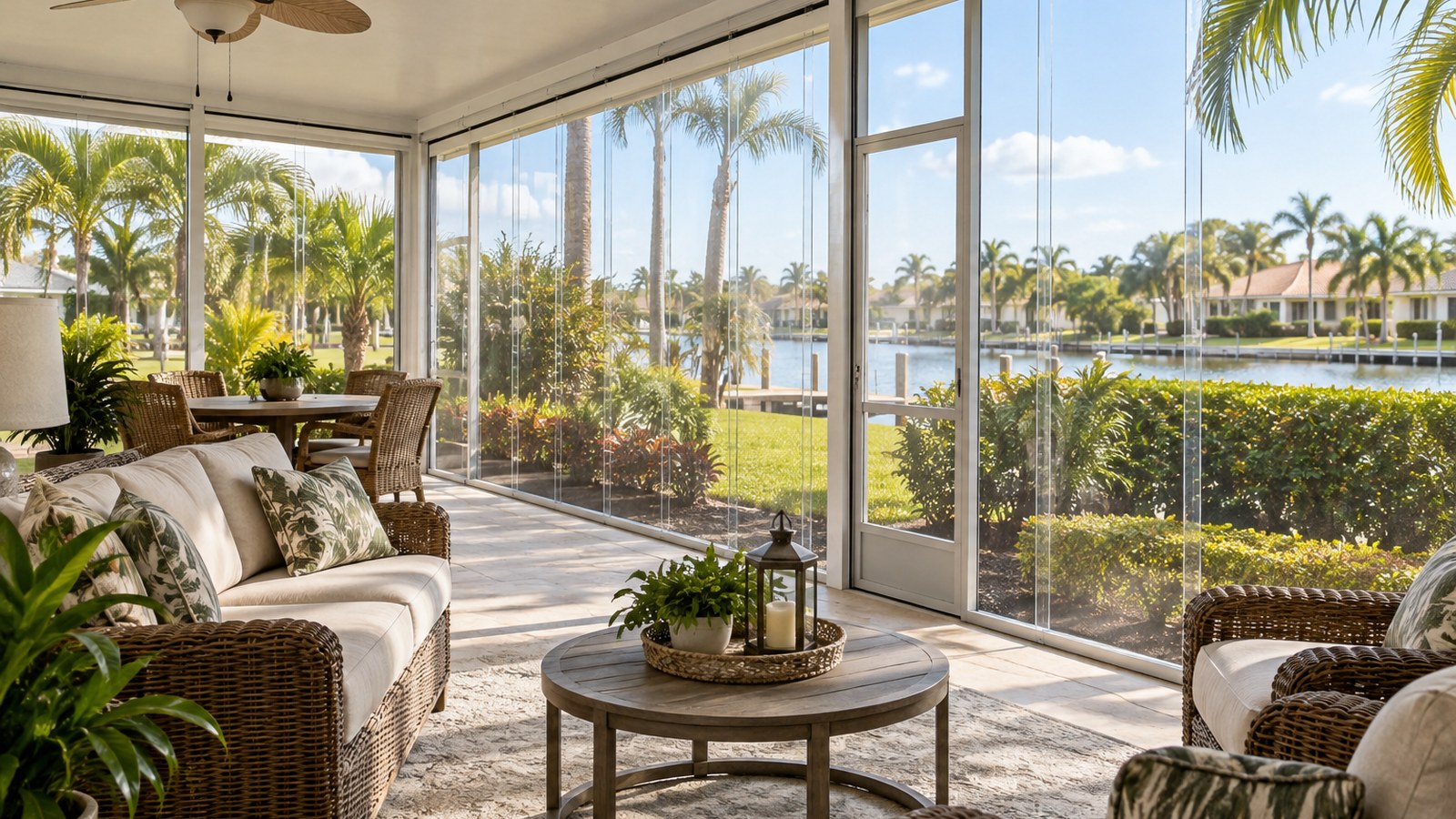
Choosing Sunroom Materials for Florida Heat
A sunroom is one of the most enjoyable additions you can make to a Florida home, and also one of the easiest to get wrong. Choose the wrong glazing material and the room turns into a space you avoid from late morning until sundown.
Two of the most common options for enclosure panels are vinyl and acrylic. They look similar in a brochure and behave differently in practice. Daly Aluminum builds sunrooms, screen rooms, and patio enclosures across Pinellas, Pasco, and Hernando Counties, and this comparison reflects the questions homeowners here ask most: which one stays cooler, which one lasts, and which one is worth the difference.
What a Vinyl Enclosure Actually Is
In enclosure terminology, vinyl usually refers to flexible vinyl glazing: clear or tinted sheet material set into sliding or stacking tracks within an aluminum frame. It is not the same thing as a vinyl window frame, which is a rigid extruded product.
Strengths
- Lower cost than rigid glazing options.
- Flexible panels stack or roll, so you can open large portions of the room.
- Not affected by rust or corrosion.
- Lightweight, which keeps structural requirements simpler.
Limitations
- Optical clarity is lower than rigid acrylic, and it tends to decline with age.
- Sustained heat and UV exposure can lead to hazing, discoloration, and loss of flexibility over time.
- Panels can loosen or distort in their tracks, which affects sealing and appearance.
- Generally better suited to a three-season or casual-use room than to a space you want to use comfortably at midday in August.
What an Acrylic Enclosure Offers
Acrylic enclosures use rigid acrylic sheet, typically in sliding panel systems set into an aluminum frame. Acrylic is the same family of material used in boat windshields and skylights, and quality varies considerably based on thickness and whether the sheet is UV stabilized.
Strengths
- Noticeably better clarity than flexible vinyl, closer to glass in appearance.
- Rigid panels hold their shape and seal more consistently.
- UV-stabilized acrylic resists yellowing better than most flexible glazing.
- Tinted and reflective options are available to reduce solar heat gain.
- Cleans easily with mild soap and water.
Limitations
- Costs more than vinyl.
- Scratches more easily than glass, so cleaning technique matters.
- Expands and contracts with temperature, so the system must be engineered to allow for movement.
- Abrasive cleaners and some solvents will damage the surface.
Heat and Humidity: The Honest Comparison
Neither material is air conditioning. What differs is how much solar heat comes through, how the room feels once the sun moves onto it, and how the material itself behaves after years of exposure.
| Factor | Flexible vinyl glazing | Rigid acrylic glazing |
|---|---|---|
| Upfront cost | Lower | Higher |
| Clarity of view | Fair, declines with age | Good, closer to glass |
| Solar heat control | Limited; depends on tint | Better with tinted or reflective options |
| UV and heat resistance | Varies widely by product grade | Better when UV stabilized |
| Panel stability | Can distort or loosen in tracks | Rigid, holds shape |
| Ventilation flexibility | Excellent; large openings | Good; sliding panels |
| Scratch resistance | Moderate | Lower; needs gentle cleaning |
| Best suited for | Casual, seasonal use | Rooms intended for regular year-round use |
Ventilation and Shade Matter More Than the Panel
Here is the part that gets skipped in most material debates: the roof, orientation, and airflow usually influence comfort more than the glazing choice does.
- Roof type. An insulated roof panel makes a dramatic difference compared with a thin, uninsulated one, because the roof takes the most direct sun.
- Orientation. A west-facing enclosure receives the harshest afternoon sun. South and east exposures are easier to keep comfortable.
- Cross ventilation. Openings on two sides, plus a ceiling fan, move far more heat out of a room than any panel upgrade.
- Shade. An existing tree, a deep overhang, or an added shade element reduces heat load before it ever reaches the panel.
If comfort in summer is your goal, spend attention on the roof and airflow first, then on the glazing.
Maintenance in a Coastal Climate
Both systems are low maintenance compared with wood construction, but they are not maintenance free.
- Rinse panels and frames periodically, more often near salt air, and clean with mild soap and a soft cloth.
- Avoid ammonia-based and abrasive cleaners on acrylic, and avoid stiff brushes on either material.
- Keep tracks and weep paths clear so water drains instead of pooling.
- Check gaskets and seals annually and replace worn pieces before a rainy season.
- Inspect fasteners and anchors, especially after a major storm.
Conditioned Space Versus Enclosure
One decision drives much of the cost and the permitting path: is this an unconditioned enclosure or a conditioned room that is part of the living space?
Unconditioned enclosures are typically built with glazing systems like the ones described above and are meant for shade, insect protection, and rain protection. Conditioned additions are treated more like a room addition, with different code, energy, and structural requirements, and with insulated glass windows rather than enclosure panels. Be clear about which one you want before you compare quotes, because the two are not interchangeable.
Permits, Code, and Structural Review
Sunrooms, screen rooms, and enclosures generally require permits in this region, and many require engineering to demonstrate that the structure and its anchoring meet wind load requirements under the Florida Building Code edition in force for the permit. Existing slabs and footings sometimes need evaluation before an enclosure can be built on them.
Confirm the requirements for your address with your local building department: Pinellas County, Pasco County, or Hernando County. City and HOA requirements may add setbacks, appearance standards, or additional review. Code and product approval information is available through the state at floridabuilding.org.
On insurance, adding an enclosure can affect your policy in ways worth understanding in advance, including how the structure is classified and whether it is covered for wind damage. Talk to your agent before construction rather than after.
So Which One Should You Choose?
A reasonable way to decide:
- Choose flexible vinyl if you want a budget-conscious way to enclose a porch for casual use, you mainly want rain and insect protection, and you are comfortable with a room you use most in the cooler months and in mornings and evenings.
- Choose rigid acrylic if you want a clearer view, a more finished appearance, a system that holds its shape, and a room you intend to use regularly for most of the year.
- Choose a conditioned addition if you want a true year-round room that functions like the rest of the house.
Whichever way you lean, pair the decision with an insulated roof and good cross ventilation. That combination does more for summer comfort than any single material choice.
Get a Plan for Your Space
Daly Aluminum designs and builds sunrooms, screen rooms, patio covers, and room additions for homeowners in Pinellas, Pasco, and Hernando Counties. We will look at your slab, your exposure, and how you want to use the room, then put the options and the permitting path in writing.
Planning a residential improvement?
Share your project goals with Daly Aluminum and request an estimate conversation for your Florida home.
REQUEST AN ESTIMATE