
Almost every Hernando County home with a slab out back eventually faces the same question: what should we actually do with this space? The three usual answers (a screen room, a vinyl and acrylic enclosure, or a full sunroom) look similar in photographs and behave completely differently in real life. Choosing between them is less about style than about one honest question: how many months of the year do you want to use the room, and in what weather?
Here is how the three compare in practical terms for the Gulf Coast.
The screen room
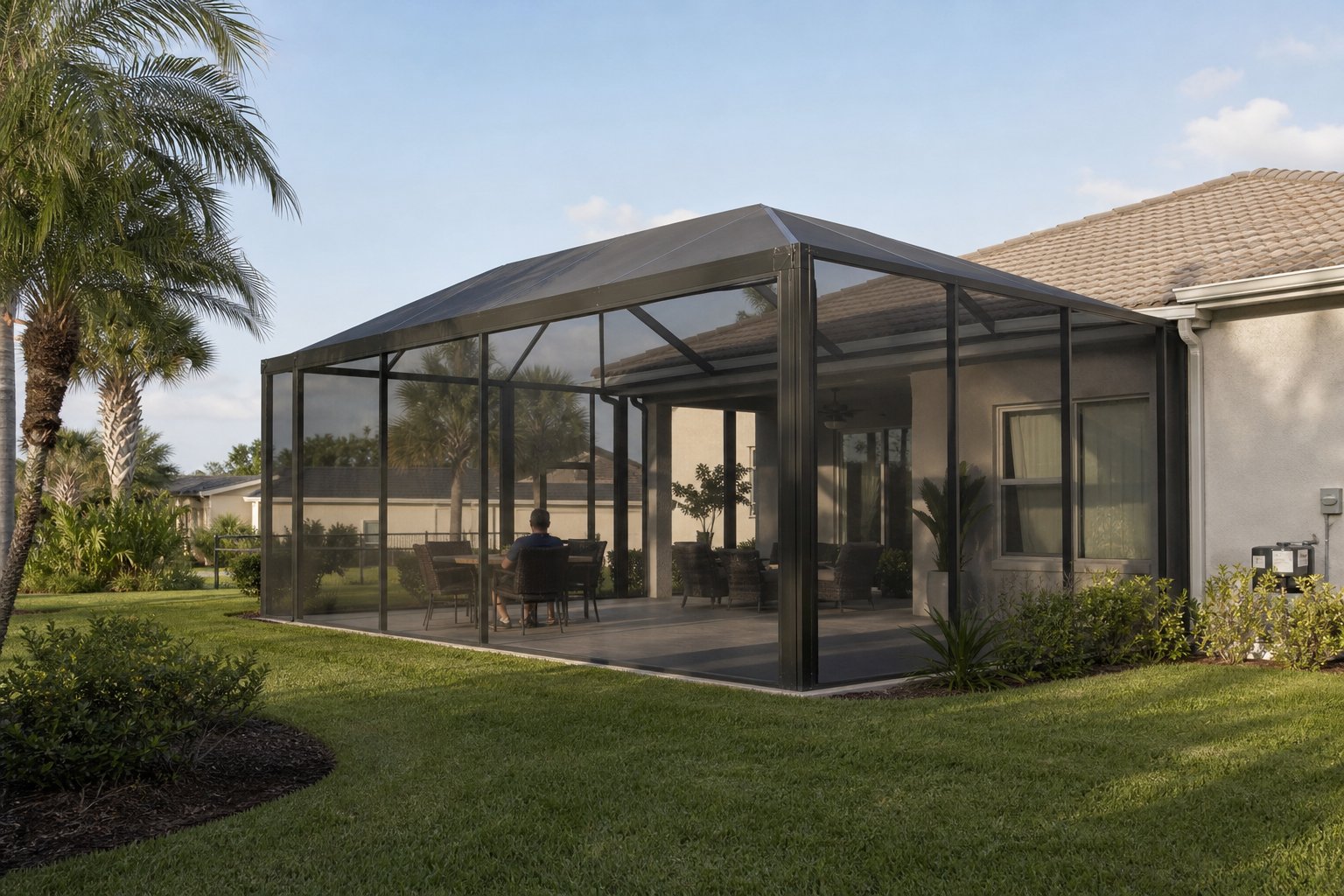
A screen room is an aluminum frame with screen panels. It keeps out insects and debris, cuts direct sun, and lets air move straight through. It is the lightest structure of the three and the simplest to build over an existing slab.
What it does well: mornings and evenings for most of the year, shade over a pool deck, keeping the space usable during mosquito season without air conditioning or any mechanical system at all. It also handles rain in the sense that the frame does: water comes through the screen, so furniture needs to tolerate getting wet.
Where it falls short: a screen room is outdoors. In a blowing summer storm it offers no real shelter for anything you leave in it, and on a humid August afternoon it is exactly as humid as the yard. It does not extend your living space; it makes your outdoor space more pleasant.
The vinyl and acrylic room
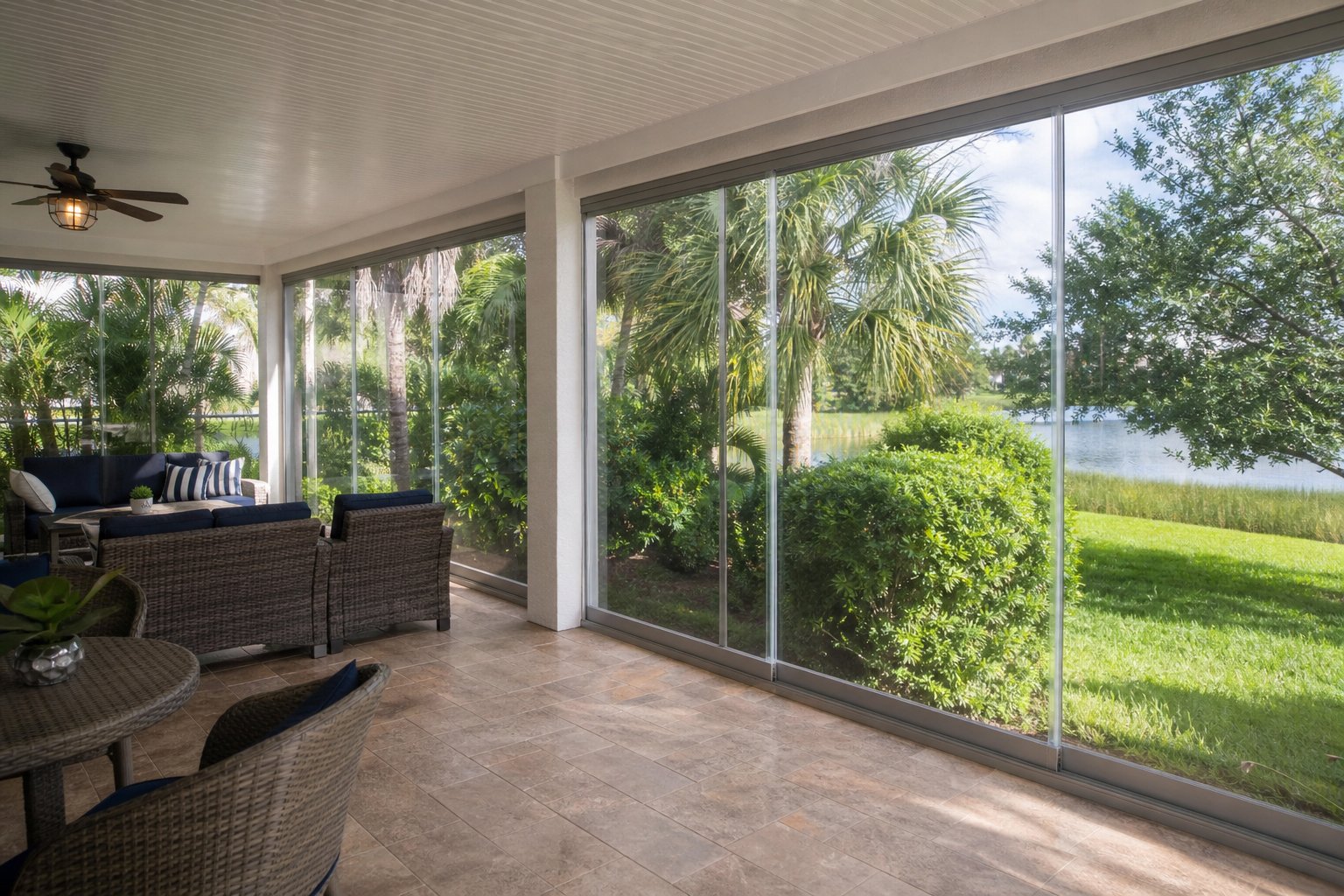
This is the middle option and the one most homeowners have not fully considered. The frame is similar, but the panels are vinyl or acrylic glazing that can be opened and stacked or closed depending on the weather. Vinyl panels roll or slide; acrylic panels are rigid, clearer, and typically operate in tracks so the room can be opened up substantially on a good day.
What it does well: flexibility. Closed, it keeps out wind-driven rain, pollen and cold snaps, so the space stays usable in January and during a summer downpour. Open, it behaves almost like a screen room. For a Hernando County lanai used year-round without being fully conditioned, this is often the best value in the group, because it converts a three-season space into something close to four-season without the cost of a full addition.
Where it falls short: it is not a conditioned room. Panels are weather barriers, not insulated glass, so on the hottest and coldest days the space still tracks the outdoors. Acrylic and vinyl also need periodic cleaning with the right products, because the wrong cleaner will haze them.
The sunroom
A sunroom is a permanent, enclosed room with glass windows and doors, a proper roof and, in most cases, climate control. Built to a full structural standard, it is an extension of the house rather than a cover over the patio.
What it does well: everything, all year. Furniture, electronics, rugs and books all live there safely. It functions as a family room, an office or a dining space regardless of the weather. Of the three options it is the one that meaningfully expands conditioned living area.
Where it falls short: cost and complexity. A sunroom is a construction project with permitting, structural work, and often electrical and HVAC involvement. It also permanently changes the character of the back of the house, which some homeowners love and some regret.
The questions that actually decide it
Rather than starting from the three product names, work backwards from how the space will be used.
- Will you put anything in it that cannot get wet? If yes, a screen room is out.
- Do you want to use it in a January cold front and an August storm? If yes, you are choosing between vinyl/acrylic and a sunroom.
- Does it need to be air conditioned? Only a sunroom does that properly.
- Is there an existing slab, and what condition is it in? All three need adequate support. A cracked or settling slab is a separate conversation that has to happen first, and it is cheaper to address before the structure goes up than after.
- Is the space attached under an existing roof or freestanding? An enclosure built under an existing roofline is a different project from one that needs its own roof structure.
- How long do you plan to stay? A sunroom is a long-horizon investment. A screen or vinyl enclosure delivers most of its value in the first season.
Things people underestimate on the Gulf Coast
Three practical points come up over and over in Hernando, Pasco and Pinellas projects.
Sun orientation matters more than square footage. A west-facing enclosure takes the full afternoon sun and will be hot in any configuration unless the glazing and shading are chosen with that in mind. An east-facing room with the same footprint is comfortable most of the day. Walk the space at 4 p.m. before you decide.
Drainage decides how the room ages. Water that sheets off the roof and pools at the base of a frame will corrode fasteners and stain the slab within a few seasons. Gutters, slab pitch and where the runoff actually goes are not afterthoughts.
All three are permitted structures. Any enclosure attached to the house is a structural addition in the eyes of the building department, and the components used have to be approved for use in Florida. This is a good thing: it means the frame anchoring and the panel systems have been engineered for the wind loads this coast sees. It also means a project done properly has paperwork behind it, which matters at resale.
A reasonable way to choose
If the goal is bug-free shade over a pool deck, build the screen room and enjoy it. If the goal is a room the family actually uses on rainy Saturdays and cool mornings without adding to the power bill, the vinyl or acrylic enclosure is usually the sweet spot. If the goal is real living space that happens to have a view of the yard, build the sunroom and build it once.
The mistake is choosing the cheapest option for a use case it was never designed to handle, then paying again a year later to upgrade.
If you want to talk through which one fits your slab, your orientation and how you actually plan to use the space, request a quote here.
Planning a residential improvement?
Share your project goals with Daly Aluminum and request an estimate conversation for your Florida home.
REQUEST AN ESTIMATE