
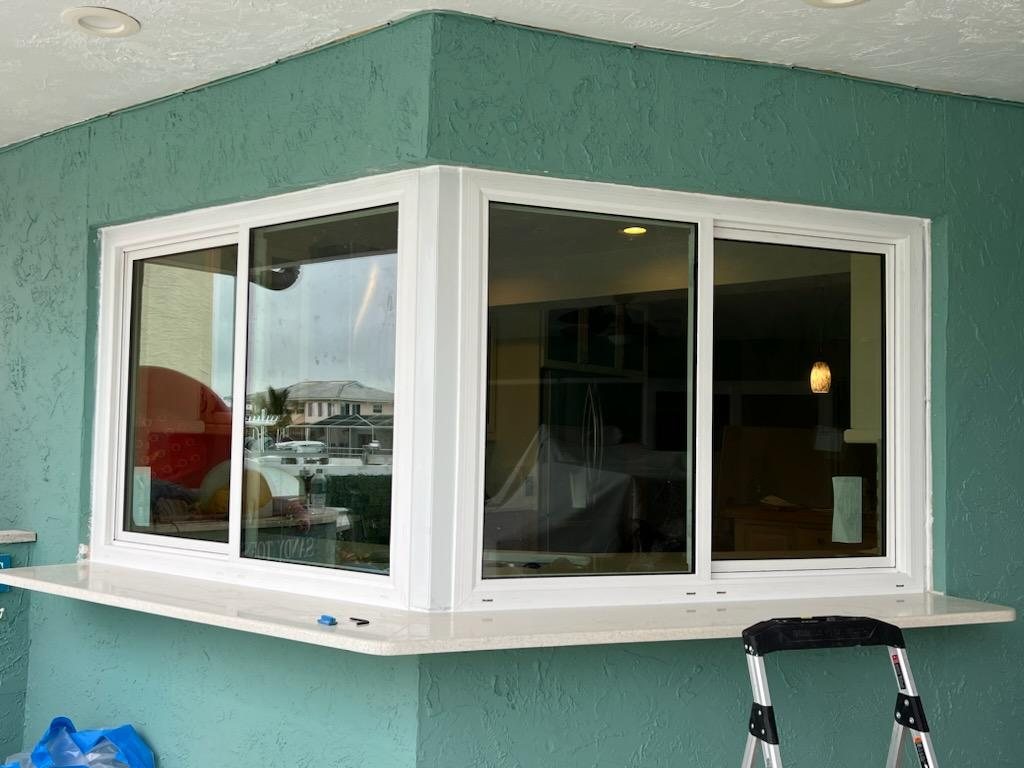
Window Warranty Gaps Catch Florida Homeowners Off Guard
Most homeowners think about a window warranty twice: for about ninety seconds at the point of purchase, and then years later when something breaks. That second moment is when people discover what their coverage does and does not include.
Near St. Petersburg and throughout Pinellas County, windows work hard. Heat, humidity, UV exposure, salt air, and storm debris all take a turn. Daly Aluminum installs replacement windows across Pinellas, Pasco, and Hernando Counties, and warranty questions come up on nearly every project. PGT offers an optional extended coverage product known as Crystal Care in addition to its standard product warranties.
Important caveat before we go further: warranty terms, eligibility windows, coverage limits, and enrollment rules are set by the manufacturer, differ by product line, and change over time. Nothing in this article should be treated as the terms of your coverage. Always read the current written warranty document for the exact product you are buying, and ask PGT or your installer for that document in writing. Manufacturer information is published at pgtwindows.com.
With that said, here are the five gaps homeowners most often run into when they have limited or no extended coverage, and the questions that close those gaps.
1. Glass Breakage Is Often Not Covered
Impact-resistant does not mean impact-proof. A tree limb, a stone thrown by a mower, or thermal stress can crack glass on a window that is performing exactly as designed. Standard manufacturer warranties typically address defects in materials and workmanship rather than accidental breakage, so a crack from an outside force often falls outside the base warranty.
That leaves two options: pay for the replacement, or file a homeowners insurance claim, where your deductible may exceed the cost of a single unit.
Ask: Does any coverage available with this product include accidental glass breakage? If so, what is excluded, and is there a limit on the number of claims?
2. Hardware Is a Separate Question
Cranks, latches, balances, rollers, and locking hardware are the parts that get used every day and live closest to salty, humid air. When one fails, the fix usually involves both a part and a service visit.
Hardware is frequently covered for a shorter period than glass or frames, and labor may not be included at all. Those two details, duration and labor, are where most warranty surprises live.
Ask: How long is hardware covered, is labor included, and who performs the service call?
3. Finish and Weathering Claims Get Denied
Along the Gulf Coast, homeowners see finish fading, chalking, and corrosion on exposed metal parts. Manufacturers often treat gradual weathering as normal wear rather than a defect, and normal wear is typically excluded.
The distinction between a finish defect and environmental wear is a judgment call written into the warranty language, which is exactly why it is worth reading before you buy rather than after.
Ask: How does this warranty define a finish defect, and how is it distinguished from weathering? Are there different terms for homes near the coast?
4. Nobody Owns the Problem
When a window leaks or a sash binds, the cause could be a product defect, an installation issue, or storm damage. Without clear coverage, homeowners can spend weeks bouncing between the manufacturer, the installer, and their insurer while each points at the others.
The practical value of extended coverage is often less about the dollars and more about having a single, defined path for service.
Ask: Who is my single point of contact for a claim, what is the expected response process, and what documentation do I need to keep?
5. Small Costs Stack Up Over Time
Over ten or fifteen years, one broken pane, one hardware failure, and one service call are not unusual. Individually, none of them is dramatic. Together, they can add up to more than the one-time cost of extended coverage would have been.
We deliberately do not publish repair price figures, because the real number depends on the unit, the part, the access, and current labor and material costs. Ask for a current quote when you need one.
Ask: What does the extended coverage cost for my specific order, and what is included versus excluded?
The Warranty Questions Worth Asking Before You Sign
| Question | Why it matters |
|---|---|
| What is covered, item by item? | Glass, seals, frames, finish, hardware, and screens are often treated differently. |
| Is labor included? | A parts-only warranty still leaves you paying for the service visit. |
| How long does each category last? | Coverage periods usually vary within the same warranty. |
| Is there an enrollment deadline for optional coverage? | Some extended programs must be purchased at or near the time of purchase or installation. |
| Is it transferable? | Matters if you may sell the home. |
| What voids coverage? | Improper installation, alterations, and certain cleaning products are common exclusions. |
| What does the installer warrant separately? | Installation workmanship is usually covered by the contractor, not the manufacturer. |
Get answers to each of these in writing, tied to the specific product on your quote. A reputable supplier will hand you the document without hesitation.
Two Warranties, Not One
On any replacement window project there are generally two separate promises at work:
- The manufacturer warranty covers the product itself, subject to its written terms, and may have optional extended coverage available.
- The installer's workmanship warranty covers how the product was installed: anchoring, flashing, sealing, and operation.
Many real-world problems are installation-related, which is why it is worth asking your contractor what their workmanship coverage includes and how long it lasts.
Keep the Paperwork Where You Can Find It
Warranty claims move faster when you have documentation. After installation, save the following together, digitally if possible:
- The signed contract and final invoice.
- Product line, glass package, and any order or serial numbers.
- The written manufacturer warranty and any extended coverage certificate.
- The permit number and the final inspection record.
- Photographs of the completed installation, including the labels before they are removed.
Also keep a note of the NFRC label ratings and the Florida Product Approval number. Approvals can be looked up through the state at floridabuilding.org, which is useful if you ever need to document what was installed.
A Note on Permits and Insurance
Replacement window work in this region generally requires a permit, with requirements varying by jurisdiction and scope. Confirm what applies to your address with Pinellas County, Pasco County, or Hernando County, plus your city or HOA if applicable. An unpermitted installation can also complicate a warranty claim later.
On the insurance side, wind mitigation credits are determined by your carrier and your policy based on an inspection, not by a contractor's assurance. Ask your agent what documentation they require.
Talk It Through Before You Buy
Whether extended coverage makes sense depends on your home, how long you plan to stay, and how much you value a single point of contact for service. There is no universal answer, and we are not going to pretend there is.
Daly Aluminum works with homeowners across Pinellas, Pasco, and Hernando Counties on replacement windows and doors. We will show you the actual warranty documents for what we propose, explain what each one covers in plain language, and let you decide.
Planning a residential improvement?
Share your project goals with Daly Aluminum and request an estimate conversation for your Florida home.
REQUEST AN ESTIMATE