
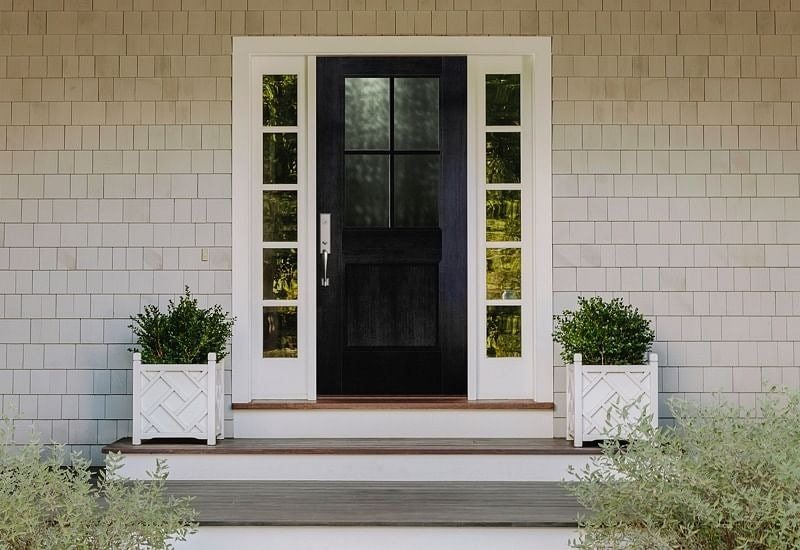
A front door does more than look good. In Pinellas County it faces direct sun, salt-influenced air, wind-driven rain, and daily humidity swings. That combination is hard on materials, which is why the wood versus fiberglass question comes up in almost every front door conversation on the Gulf Coast.
Why the Front Door Choice Matters
The entry door is part of the building envelope. It affects how much heat enters the foyer, how well the house seals, how secure the entrance is, and how the home looks from the street. A door that warps, swells, or corrodes creates air leaks and operating problems well before it looks worn out.
Common Front Door Problems Near the Gulf
- Sticking or dragging as the slab expands and contracts with humidity
- Finish fading or chalking on a west or south facing entry
- Weatherstripping compressed flat, letting air and water past
- Corrosion on hinges, handlesets, and fasteners closer to the water
- Water staining at the threshold where the sill is no longer sealed
- Daylight visible around the frame, usually a sign of a poor original installation
What Makes Wood Doors Appealing
Wood offers depth, weight, and detail that is hard to replicate. Panels, raised moldings, and stain grain read as authentic because they are. Wood is also easy to modify: it can be trimmed, re-stained, or repainted a different color later.
The trade-off is maintenance. In a hot, humid, high-UV climate, wood entry doors need their finish maintained on a regular schedule, and a door with direct sun exposure and no overhang will need attention sooner. Moisture can cause swelling and movement if the finish is allowed to degrade.
Why Fiberglass Doors Are Popular in Florida
Fiberglass skins are molded, often with a wood grain texture, over an insulated core. They do not rot, do not absorb water the way wood can, and hold a factory finish well under UV exposure. They are also generally more stable dimensionally through humidity swings, which means fewer sticking and alignment complaints.
Fiberglass has limits too. A deep scratch or impact damage is harder to repair invisibly than a nick in wood, and refinishing options are narrower. Quality varies significantly between product lines, particularly in how convincing the grain looks and how the edges are constructed.
Side by Side
| Factor | Wood | Fiberglass |
|---|---|---|
| Appearance | Authentic grain and depth; fully customizable | Molded grain or smooth; many styles available |
| Humidity stability | Can swell or move if the finish degrades | Generally stable |
| Maintenance | Periodic refinishing expected | Cleaning and occasional hardware care |
| Insulation | Depends on thickness and construction | Insulated core is standard on most lines |
| Repairs | Sanding, filling, and refinishing are practical | Surface damage is harder to hide |
| Coastal exposure | Needs an overhang and diligent upkeep | Tolerates exposure well; hardware still needs to be corrosion resistant |
Which One Looks Better?
This is genuinely subjective. Up close, a well-finished wood door has a richness that high-end fiberglass approaches but does not match exactly. From the street, quality fiberglass with a good stain finish is convincing. If your home has a traditional or historic character and a covered entry, wood is a strong option. If the entry is exposed and you want it to look the same in ten years with less effort, fiberglass usually wins.
Energy Performance
Most fiberglass entry doors use an insulated core, which typically gives them better thermal performance than a solid wood slab of similar thickness. That said, in real homes the weatherstripping, threshold, and installation quality often matter as much as the slab material. The ENERGY STAR program, run by the U.S. EPA and Department of Energy, publishes performance criteria for exterior doors that can help you compare products.
If the door includes glass, the glazing package matters. Larger glass areas on a sun-facing entry will transmit more heat, so look at the glass specification rather than just the door material.
Maintenance Expectations
Wood
- Inspect the finish at least annually, more often on an exposed entry
- Refinish or re-seal on the manufacturer's recommended schedule
- Keep the bottom edge and threshold sealed
- Address any swelling or sticking early rather than planing the door
Fiberglass
- Wash the surface periodically, especially near the coast
- Rinse and maintain hardware to limit corrosion
- Replace weatherstripping when it no longer compresses
- Check the threshold seal and adjust as needed
Thinking About Cost
Both materials span a wide range depending on size, glass, sidelites, hardware, finish, and whether the frame and threshold are being replaced. Custom wood units and premium fiberglass systems can overlap significantly in price, so comparing material categories in the abstract is less useful than comparing two specific configurations quoted for your opening. Factor in long-term upkeep when you compare, not just the purchase.
Coastal Considerations
Near the water, hardware corrosion is often the first failure, regardless of slab material. Choose finishes and hardware rated for coastal exposure. If opening protection is a requirement for your home, confirm whether the entry door assembly is impact rated and what design pressure it carries. Product approvals can be checked through the Florida Product Approval search, and local permit requirements should be confirmed with Pinellas County or your city building department.
How to Decide
- Look at the exposure. Is the entry covered, or does it take full afternoon sun and rain?
- Be honest about maintenance. Will the door actually get refinished on schedule?
- Decide how important authentic grain and full customization are to you.
- Confirm any impact or design pressure requirements for the opening.
- Compare specific configurations, including glass, hardware, and frame.
- Check the written warranty terms for the exact product line.
What to Look for in an Installer
- Verified licensing through the Florida Department of Business and Professional Regulation and insurance documentation from the agent
- A written scope naming the product line, glass, hardware, and finish
- A clear answer on how the frame is flashed and the threshold sealed
- Who pulls the permit and schedules any inspection
- Separate written product and workmanship warranty terms
How Daly Aluminum Approaches Front Door Projects
Daly Aluminum measures the existing opening, checks the frame and threshold condition, and reviews exposure and any opening protection requirements before recommending a product. The goal is a door that fits the opening correctly, seals well, and suits how the entry is actually used.
Final Thoughts
For most exposed Pinellas County entries, fiberglass is the lower-maintenance choice and performs well in heat and humidity. Wood remains a strong option where the entry is protected and the owner is willing to keep up the finish. Either can be an excellent door when the product is well made and the installation is done properly.
To talk through options for your entry, request a consultation. We work with homeowners across Pinellas, Pasco, and Hernando Counties.
Planning a residential improvement?
Share your project goals with Daly Aluminum and request an estimate conversation for your Florida home.
REQUEST AN ESTIMATE