
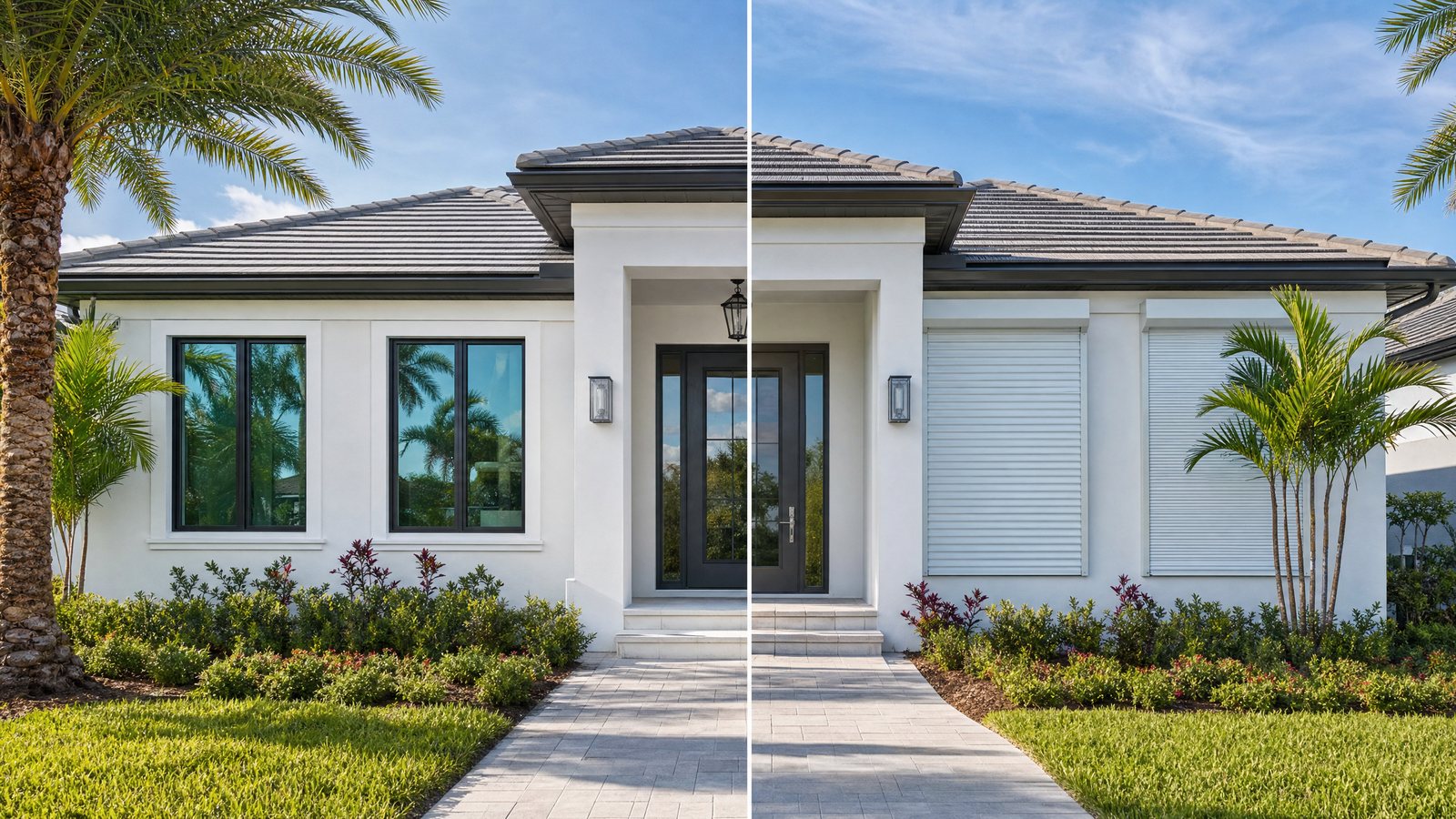
Homeowners in Pinellas, Pasco, and Hernando counties have two common ways to protect glazed openings from windborne debris: impact-rated windows or an approved shutter system. Either can be part of a code-compliant approach when the exact product, opening, and installation method meet the requirements for the property. The practical differences are convenience, maintenance, appearance, and whether the existing windows also need replacement.
What impact-rated windows do
Impact windows use laminated glass and a tested frame assembly. The glass may crack when struck, but the interlayer is designed to help the glazing remain in the opening. The Florida Building Commission's Product Approval search lets homeowners and contractors review approved products and their supporting documents.
The approval applies to a specific configuration, including size, glass, frame, design pressure, anchoring, and installation conditions. A product name by itself is not enough. The proposed unit and installation detail should be checked against the approval documents for the project.
What hurricane shutters do
Shutters are approved protective systems placed over windows, doors, or other openings. Common forms include removable panels, accordion shutters, roll-down shutters, and Bahama-style systems. Some remain mounted year-round; others must be installed before a storm.
Shutters can make sense when existing windows are serviceable and the main goal is opening protection. The tradeoff is preparation. Tracks, fasteners, locks, and panels need maintenance, and deployable systems require enough time and physical access to close or install them.
Side-by-side comparison
| Factor | Impact windows | Hurricane shutters |
|---|---|---|
| Storm preparation | Protection remains in place when the windows are closed and latched. | Many systems must be closed or installed before the storm. |
| Existing windows | Replaces the entire window assembly. | Can protect serviceable existing windows. |
| Daily use | Functions as the home's regular window. | Usually does not change everyday window performance. |
| Maintenance | Locks, seals, glass, and drainage paths need routine care. | Tracks, hardware, motors, and stored panels need routine care. |
| Documentation | Keep product approval, permit, and inspection records. | Keep product approval, permit, and inspection records. |
Convenience before a storm
The National Hurricane Center recommends completing home-protection preparations before hurricane-force winds arrive. A system that is difficult to deploy may not be a good match for a seasonal resident, a household with limited mobility, or a second-story opening. Impact windows reduce the repeated setup at each opening, while permanent accordion or roll-down shutters can be faster to close than removable panels.
Whichever option you choose, include every opening in the plan. Exterior doors, garage doors, skylights, and glazed patio openings can matter along with windows. Confirm the property's requirements with the building department that has jurisdiction over the address.
Permits and product approvals
Florida projects must use products and installation methods that match the applicable code requirements. Local permitting authorities in Pinellas, Pasco, and Hernando counties review the project documents and conduct inspections. Requirements can vary by municipality, building height, exposure, opening size, and product configuration, so do not rely on a neighbor's specification as proof for your home.
- Ask for the manufacturer and exact product or model.
- Ask for the Florida Product Approval or other accepted approval record.
- Confirm that the approval covers the proposed size and configuration.
- Confirm who is responsible for the permit and required inspections in the written scope.
- Keep the closed permit and final inspection record with the home documents.
Insurance considerations
The Florida Office of Insurance Regulation explains that insurers offer discounts for qualifying hurricane-loss mitigation features. The amount and eligibility depend on the home, the completed inspection, the insurer, and its filed rating plan. Buying an impact product or shutter does not guarantee a specific premium reduction.
Ask the insurance agent what documentation is required before ordering. A qualified wind-mitigation inspector, not the installer or this article, determines how the home's features are recorded on the applicable form.
Maintenance and readiness
Impact windows should open, close, lock, and drain correctly. Keep weep holes clear and inspect seals and hardware. Shutters should be operated or test-fitted before storm season. Label removable panels by opening, store fasteners with them, and replace corroded or missing hardware with components allowed by the system instructions.
FEMA and the National Hurricane Center both emphasize preparing before a threat is imminent. Build a written household plan that covers who will secure each opening, where removable parts are stored, and what happens if no one is home.
How to choose
Impact windows may fit when the existing windows are worn, difficult to operate, leaking, or already due for replacement, and when year-round readiness matters. Shutters may fit when the existing windows remain sound and the main need is an approved protective system. A mixed approach can be appropriate, but it still needs to address every required opening and be documented correctly.
Start with an opening-by-opening assessment and compare written proposals that list the exact products, approvals, installation method, permit responsibility, and exclusions. For a residential project in Pinellas, Pasco, or Hernando County, request an estimate to review the options for the property.
Planning a residential improvement?
Share your project goals with Daly Aluminum and request an estimate conversation for your Florida home.
REQUEST AN ESTIMATE