
Every June, Florida homeowners start watching the tropics again. The honest source of the stress is usually uncertainty: you are not sure which parts of your home are actually protected, and which are simply untested.
This guide walks through the main categories of hurricane protection for a Gulf Coast home, what each one does, and what to verify before you buy. Some of these are products Daly Aluminum installs. Others belong to different trades, and we have noted that clearly so you know who to call.
Start with the code requirements for your address
Opening protection requirements in Florida depend on your location, the design wind speed for that location, and whether you are in a windborne debris region. Those determinations come from the Florida Building Code rather than from a product brochure. The code itself and the statewide product approval database are published by the Florida Building Commission, and your local building department confirms what applies to your permit. Before you commit to a protection strategy, confirm the requirement for your specific home with your building department:
- Pasco County Building Construction Services
- Pinellas County Building and Development Review Services
- Hernando County Building Division
Protection for windows and doors
1. Impact rated windows
Impact rated windows pair laminated glass with a reinforced frame and are tested against windborne debris and pressure cycling. Because they are permanent, there is nothing to deploy when a storm is approaching. They also reduce ultraviolet transmission and outside noise. Verify that the specific product carries a current Florida Product Approval or Miami-Dade Notice of Acceptance for the pressures at your openings.
2. Accordion, roll down, and Bahama shutters
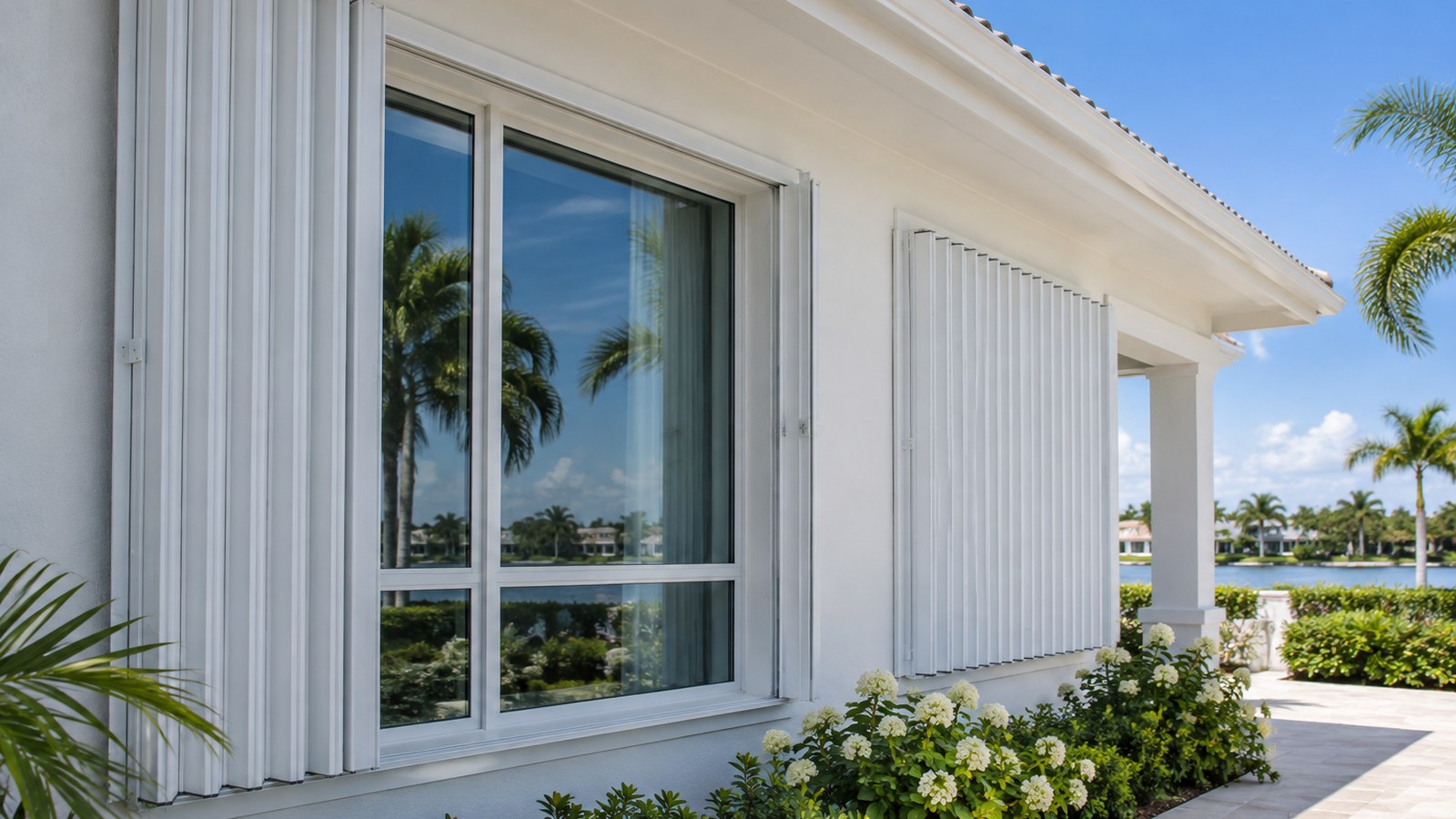
Shutters protect the opening rather than replacing the window, which makes them a practical option when replacing all the glass is not on the table. Accordion shutters slide closed from the side, roll downs deploy vertically and can be motorized, and Bahama style units mount above the window and double as shade. All of them need periodic exercise and lubrication so they actually operate when you need them.
3. Removable storm panels
Steel, aluminum, or clear polycarbonate panels mount to permanent tracks or fasteners around the opening. They are the most economical rated option in most cases. The tradeoff is labor and storage: someone has to install them before the storm and remove them after, and that person needs to be able to do it safely.
4. Fabric and screen systems
Engineered storm fabrics and screens attach over openings and are lighter than metal panels. Approved systems are tested, so check the approval documentation and the manufacturer's installation instructions carefully, since performance depends heavily on correct attachment.
5. Reinforced entry and patio doors
Doors are a pressure critical opening. Impact rated entry doors and sliding glass doors use reinforced frames, laminated glass where applicable, and multi point hardware. Sidelights and transoms need protection too, and are easy to overlook.
6. Screen rooms, sunrooms, and patio covers
Attached outdoor structures are engineered assemblies that carry their own load requirements and permitting. If you have an older enclosure or cover, its condition and attachment matter, because a failing structure can damage the wall it is fastened to.
Protection handled by other trades
These items are important but sit outside the scope of window, door, and remodeling work. We mention them so your plan is complete, and recommend calling a licensed specialist in each area.
7. Roof to wall connections
Metal connectors that tie the roof structure to the walls resist uplift. Newer homes are built with these connections; some older homes can be retrofitted. This is work for a licensed roofing or general contractor, and it is commonly evaluated during a wind mitigation inspection.
8. Garage doors
The garage door is often the largest opening on the house, and a failure there can pressurize the structure. Wind rated doors and bracing systems exist for this. Contact a licensed garage door company.
9. Skylights, vents, and soffits
Roof penetrations and soffit systems are frequent water entry points in high wind. A roofing contractor can assess whether yours are rated and properly secured.
10. Flood measures and backup power
Wind protection does nothing about flooding. Flood risk depends on elevation and flood zone, which you can check on the FEMA Flood Map Service Center. Standard homeowners policies generally exclude flood damage, so ask your agent about separate flood coverage. Generators and transfer switches should be installed by a licensed electrician.
How to choose among the options
| Option | Deployment effort | Best suited to |
|---|---|---|
| Impact rated windows and doors | None, always in place | Homeowners replacing aging glass anyway, or who cannot deploy panels |
| Accordion or roll down shutters | Low, close before the storm | Many openings, or a homeowner who travels |
| Storm panels | High, install and remove each time | Budget conscious projects with help available |
| Fabric or screen systems | Moderate | Large openings and covered porches, where approved |
Details that determine whether protection performs
- Approval documentation. Ask for the Florida Product Approval or Notice of Acceptance number for what is being installed, and keep it with your home records.
- Anchoring. Rated products fail when fasteners, substrate, or spacing do not follow the installation instructions. This is why permitted, inspected installation matters.
- Permits. Hurricane protection installations generally require a permit and inspection. Keep the final inspection record.
- Maintenance. Operate shutters at least once before each season. Confirm you still have all the panel hardware.
- Insurance documentation. Wind mitigation features may affect a Florida homeowners policy, but any premium effect depends on your carrier, your policy, and an inspection. Ask your agent what your policy recognizes and what documentation it requires.
Before the next storm
Walk your home and list every opening: windows, entry doors, sliders, garage, and any enclosure. Note which ones have rated protection and which do not. That list is the real starting point, and it also makes conversations with contractors and your insurer far more productive. For storm timing and local watches, rely on the National Hurricane Center and your county emergency management office.
Daly Aluminum installs impact rated windows and doors, shutters, panels, screen rooms, and patio covers for homeowners in Pinellas, Pasco, and Hernando counties. To review your openings and get a project specific estimate, request an evaluation.
Planning a residential improvement?
Share your project goals with Daly Aluminum and request an estimate conversation for your Florida home.
REQUEST AN ESTIMATE