
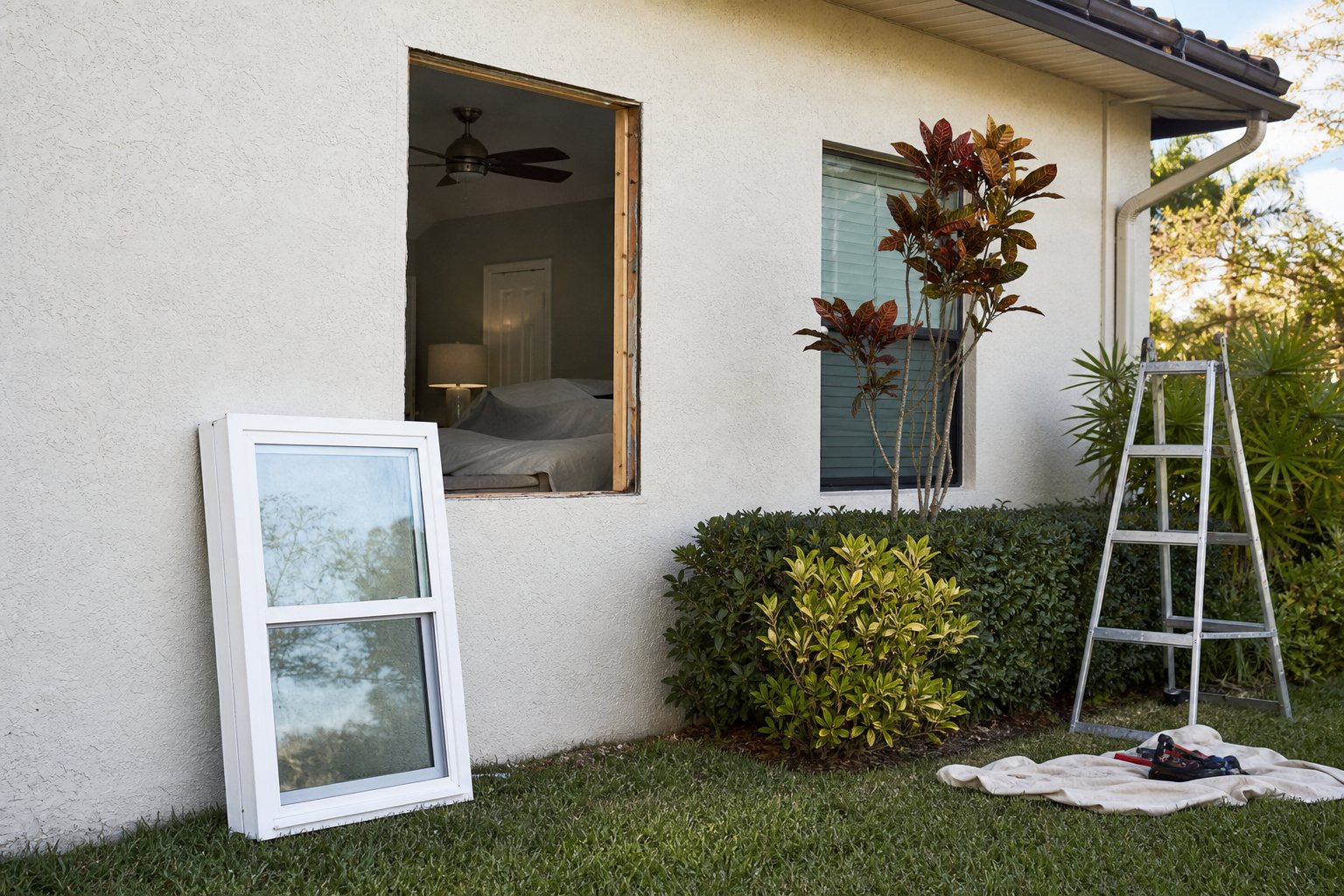
There is a rhythm to window and door replacement on Florida's Gulf Coast, and most homeowners discover it the hard way. Interest spikes in late spring and early summer, when hurricane season coverage starts and everyone decides this is the year. By then the installation calendar is crowded, manufacturing lead times have stretched, and the permit desk is busy. The work that gets done comfortably, on a calm timeline, is almost always the work that was ordered in the fall.
If you are in Pasco County and thinking about replacing windows or doors, autumn is a practical time to start, and not for a vague seasonal reason. There are four concrete steps between your decision and a finished installation, and each one tends to run more smoothly in the fall than it does in the spring rush.
1. Custom products are built to order
Replacement windows and doors for Florida homes are not pulled off a shelf. Each unit is manufactured to the measured opening, in the chosen frame material, glass package, color and hardware, and it has to carry an approval for use in this state. Manufacturing queues are real, and they generally lengthen as the industry heads into its busiest stretch.
Ordering in October or November means your units are built during a quieter part of the manufacturing calendar. Ordering in April often means joining a queue that grows every week as hurricane season approaches.
2. Measurement has to happen before anything is ordered
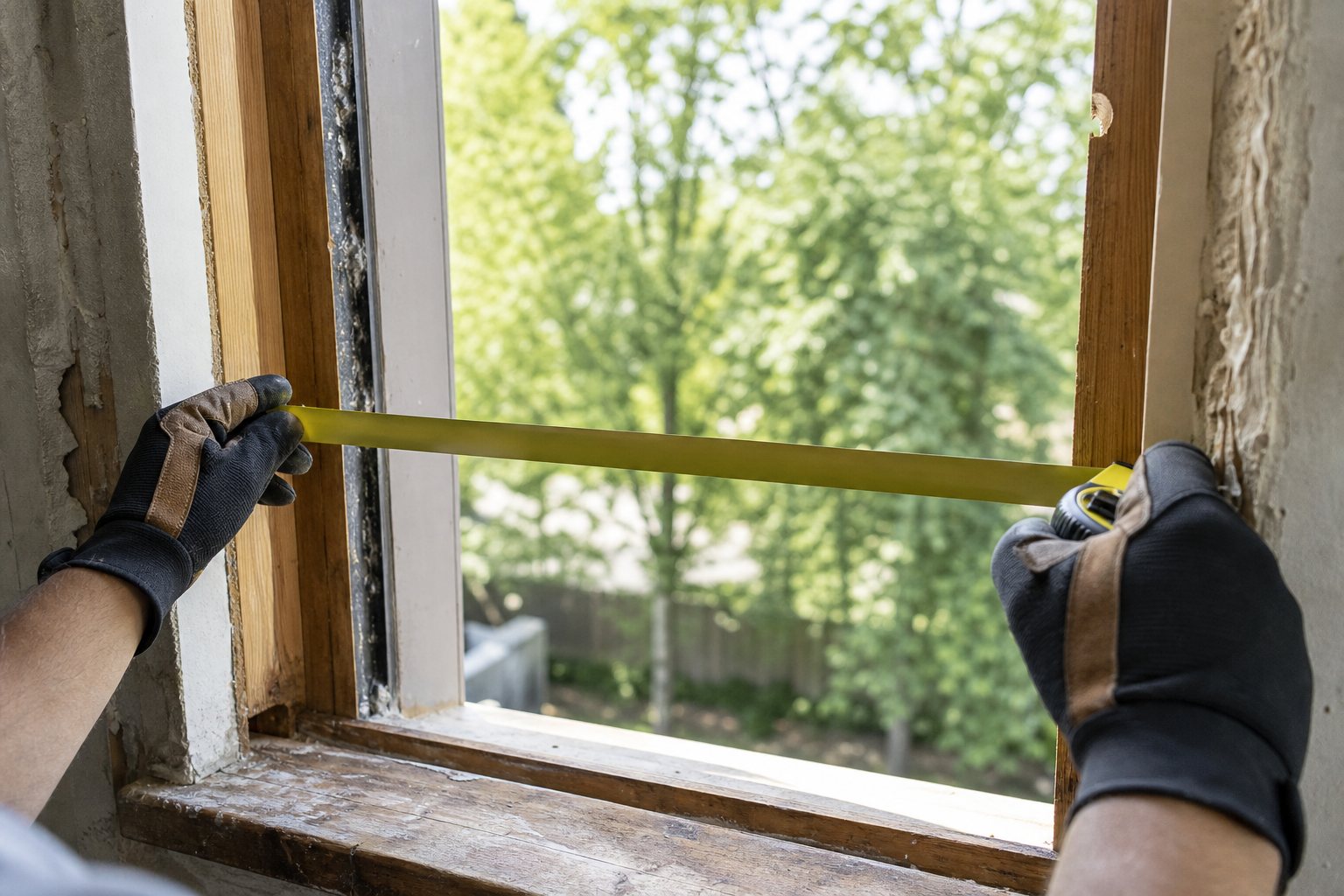
A proper replacement starts with a field measure of every opening, not a rough count. Older Pasco County homes in particular have openings that have shifted over decades: block construction that has settled, frames that were altered during a previous remodel, stucco returns that hide how much of an opening is actually usable. A measure that is off by a half inch turns into a custom unit that does not fit, and a reorder on a custom product is not a quick fix.
This step is also where you find surprises worth knowing about early: rotted framing behind an old wood unit, an opening that was never flashed correctly, a slider that was installed over the top of an earlier one. Finding these in the fall gives you time to plan. Finding them in June, with a storm in the forecast, does not.
3. Permits and inspections take calendar time
Window and door replacement in Florida is permitted work, and the permit application has to name the specific approved product being installed. Windows, doors, shutters and structural components used in Florida buildings must be approved before installation, either through the statewide Florida Product Approval system, which issues each product configuration an FL number, or through a Miami-Dade Notice of Acceptance. The paperwork submitted to the building department has to match the product actually delivered to your driveway.
That matters for scheduling in a simple way: approval documentation belongs to a specific product configuration. Substituting a different unit at the last minute because the first one is backordered means revised paperwork. Ordering early helps you avoid the substitution entirely.
After installation there is an inspection, and the inspection has to be scheduled. Nothing about that process is unusually slow, but it is not instant, and it does not compress just because a storm is coming.
4. Installation conditions are better in the fall
Replacing an opening means the house is briefly open to the outside. On the Gulf Coast that is a different proposition in October than it is in July, when an afternoon thunderstorm can arrive with very little warning. Cooler, drier conditions mean sealants cure the way they are meant to, crews work efficiently, and there is less risk of an open wall meeting a downpour.
What the fall timeline actually looks like
Stacked end to end, a fall project runs roughly like this: consultation and product selection, then a field measure of every opening, then the order goes to the manufacturer while the permit application is prepared and submitted, then delivery and installation, then final inspection. Each step is straightforward. The reason the sequence gets painful in spring is that every one of those steps is competing with a surge of other homeowners doing exactly the same thing at the same time.
Start in the fall and the sequence has slack in it. Start in May and it has very little.
Use the quieter season to make better decisions
There is a second, less obvious benefit. A homeowner ordering in October has time to compare options: impact-rated glass versus a shutter system on certain openings, frame materials, glass packages, the difference in how a single hung and a casement behave in coastal wind, what a particular hardware choice means for a door you use every single day. A homeowner ordering under pressure often takes whatever is available.
Putting hands on the actual products is worth an afternoon. Operating a slider, feeling the weight of a door, comparing frames side by side tells you things a brochure cannot, and it is a more pleasant exercise in November than in a hurry in June.
One more reason not to wait
According to the National Hurricane Center, the Atlantic hurricane season runs from June 1 to November 30, with peak activity in September. Homeowners tend to treat the fall as the safe stretch, which is part of why it is a sensible moment to act: you get an unhurried process now, and the work can be complete and inspected well before the next season starts. Replacing windows and doors is not a project you want to be starting when a system is already in the Gulf.
Talk it through with Daly Aluminum
Daly Aluminum works with homeowners across Pasco, Pinellas and Hernando counties on window and door replacement, and the fall calendar is where most of that planning happens. If you want to see where a fall order would land on the calendar for your home, request a quote here, and we will walk through the timeline for your specific openings.
Planning a residential improvement?
Share your project goals with Daly Aluminum and request an estimate conversation for your Florida home.
REQUEST AN ESTIMATE