
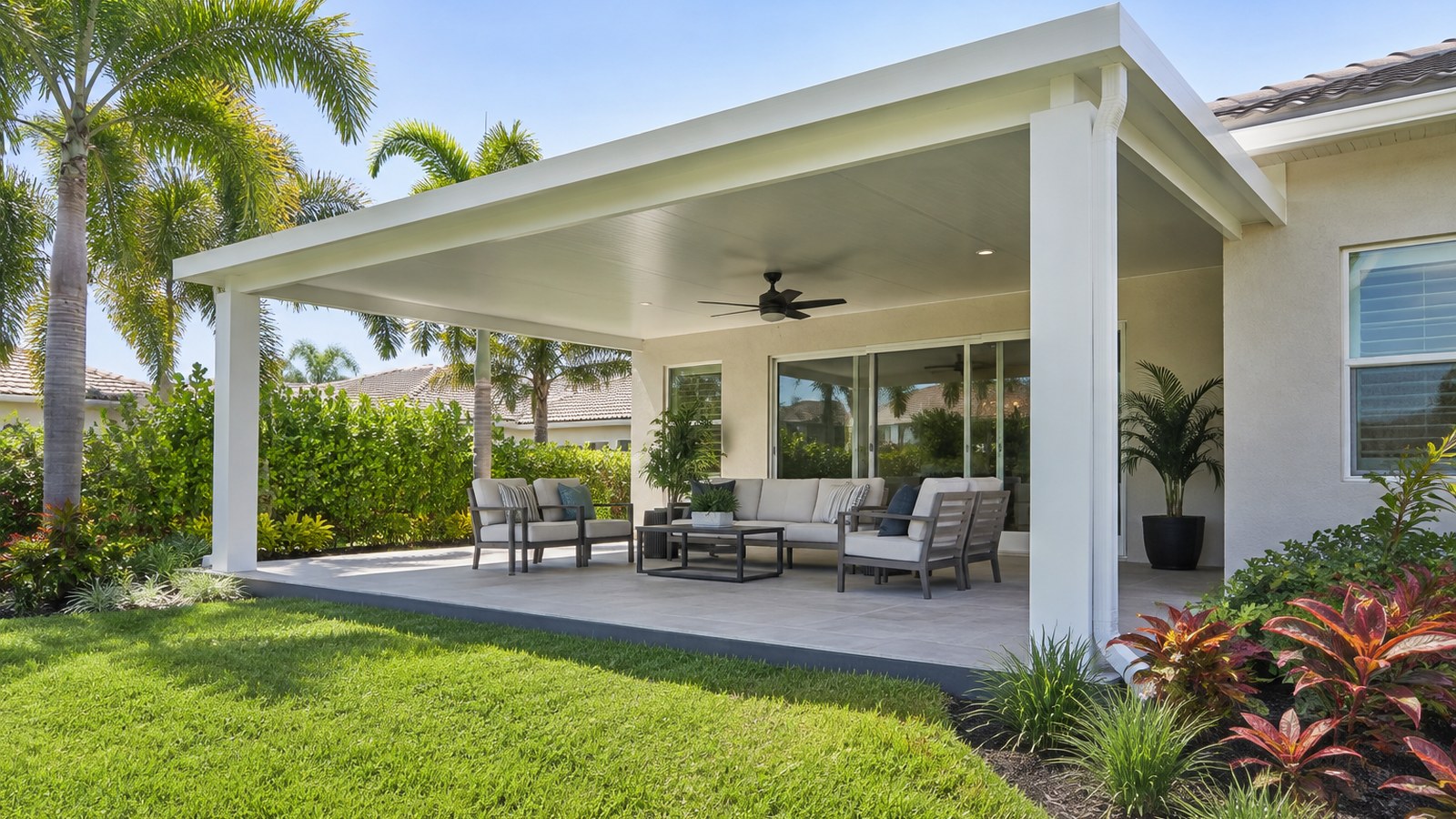
Hiring the right contractor matters more for a patio cover than most homeowners expect. The structure is attached to your house, it has to shed heavy rain, and it has to be engineered and permitted for the wind loads that apply at your address. This guide covers what to look for when comparing patio cover installers near Hernando County, Florida.
Patio Cover Basics for Florida Homes
Most covers in this region are aluminum, either an open lattice style or a solid insulated panel roof. Aluminum resists rot and insects and holds a factory finish well in strong sun. Wood offers a different look but needs regular sealing in a humid climate. Vinyl and composite pieces show up mostly as trim rather than as the structural roof.
| Option | Best for | Keep in mind |
|---|---|---|
| Solid insulated aluminum | Full rain cover, cooler space, mounting fans and lights | Higher cost than lattice; blocks daylight |
| Aluminum lattice | Filtered shade, open feel, lower cost | Does not keep you dry |
| Wood pergola | Traditional appearance, custom detailing | Ongoing sealing and inspection required |
Patio Cover, Pergola, or Screen Room?
A patio cover gives you shade and rain protection with open sides. A pergola is decorative and partially open overhead. A screen room adds insect control and makes the space usable in the evening. Many homeowners start with a cover and add screen later, which is easier and cheaper if the structure is designed for it from the start.
Codes, Wind Ratings, and Permits
Attached covers and enclosures are regulated structures under the Florida Building Code. Manufactured aluminum systems typically carry a Florida Product Approval or a local evaluation report documenting tested performance, which you can verify through the state's Product Approval search. The required design pressure depends on your location, exposure, and the structure itself.
Permitting happens locally. For projects in Hernando County, requirements come from Hernando County; homeowners inside city limits should check with their city. Confirm current requirements before signing a contract, and expect the permit to require a drawing and product documentation.
HOA Rules and Property Lines
Architectural review boards often have rules about roof style, color, and how far a structure may extend. Setback and easement rules can also limit placement. Both should be checked during design, not after materials are ordered.
What Drives the Cost
Instead of relying on published price ranges that rarely match a specific property, focus on the variables an estimator will look at:
- Square footage and the clear span between posts
- Solid insulated panels versus lattice
- Roof pitch and the attachment detail to the house
- Existing slab condition, or whether new concrete and footings are needed
- Screen enclosure, fans, lighting, or electrical work
- Gutters and drainage changes
- Site access for materials and equipment
Sun, Storms, and Salt Air: Common Problems
- Water draining back toward the house because of insufficient slope or poor flashing at the ledger
- Pooling at the slab edge when runoff is concentrated without a gutter
- Fastener corrosion in homes near the Gulf
- Heat radiating through thin uninsulated panels
- Loose or undersized anchoring, which becomes a real problem in high winds
Upgrades That Extend Service Life
Corrosion-resistant hardware, properly sized gutters and downspouts, insulated panels rather than thin skins, and a clean, well-sealed connection where the cover meets the wall all contribute to a structure that still looks good years later. Where a cover ties into an existing screen room or pool cage, that transition deserves attention so water is not trapped between the two.
How to Compare Installers
- Ask what system they install and for the product approval documentation. A specific product and approval number is a good sign.
- Confirm who pulls the permit. The contractor should handle it, and the permit should be in the contracting company's name.
- Ask how the cover attaches to the house and how water is routed away.
- Request a written scope that lists materials, colors, panel type, gutter details, and electrical.
- Verify licensing and insurance directly. Florida contractor licenses can be checked through the Florida Department of Business and Professional Regulation, and you can ask for a certificate of insurance sent directly from the insurer or agent.
- Compare like for like. Quotes with different panel thickness or different scope are not comparable on price.
Red Flags
- Pressure to sign the same day
- Large cash deposits or payment demanded in full up front
- Reluctance to pull a permit, or suggesting you pull it as the homeowner
- Vague proposals without product names or dimensions
- No physical business address or written contract
- Guarantees that sound absolute, especially around storms or insurance outcomes
Questions to Ask Before You Sign
- What product line and panel type are you installing, and what is its approval documentation?
- What design pressure applies to my address and how was it determined?
- Who applies for the permit and schedules inspections?
- How will the cover attach to my roof or wall, and how is that flashed?
- What is included for drainage?
- What is the written warranty on the product, and separately on the workmanship?
- What is the payment schedule, and what triggers each payment?
- What happens if hidden conditions are found in the slab or wall?
A Typical Project Sequence
- On-site visit and measurement
- Design and product selection
- Written proposal and agreement
- Permit application and HOA submittal where required
- Material order and delivery
- Installation
- Inspections
- Final walk-through and care instructions
Overall duration is usually driven more by permit review and material lead times than by the installation itself, so ask for a range rather than a fixed completion date.
Warranties, Insurance, and Workmanship
Product warranties are issued by the manufacturer and vary by line and component. Workmanship coverage comes from the contractor and is a separate document. Ask for both in writing, and keep them with your permit and inspection records, which can be useful if you sell the home or file a claim later.
Budget Planning
Decide early which elements are essential and which can be phased. Structure, drainage, and anchoring should not be value-engineered away. Fans, lighting, and screen can often be added later if the structure is designed to accept them, which is a practical way to manage a budget without compromising the parts that are hard to change.
Maintenance Basics
- Rinse panels and posts periodically, especially near the coast
- Clear gutters and downspouts before summer storm season
- Check fasteners and brackets after major weather
- Inspect the sealant line where the cover meets the house once a year
- Trim back vegetation that traps moisture against the structure
Frequently Asked Questions
Do I need a permit for a patio cover in Hernando County?
Attached structures generally require a permit. Confirm the specifics for your property with the county or your city building department.
Can a patio cover be added to an existing slab?
Often yes, but the slab thickness and edge condition need to be evaluated. Some projects require new footings.
Can I screen it in later?
Usually, if the structure and posts are planned for it. Mention it during design even if you are not doing it now.
Get an Estimate
Daly Aluminum is based in Holiday, Florida, and works with homeowners across Hernando, Pasco, and Pinellas Counties, including Spring Hill, Brooksville, and Weeki Wachee. request a consultation to review your patio and options.
Planning a residential improvement?
Share your project goals with Daly Aluminum and request an estimate conversation for your Florida home.
REQUEST AN ESTIMATE