
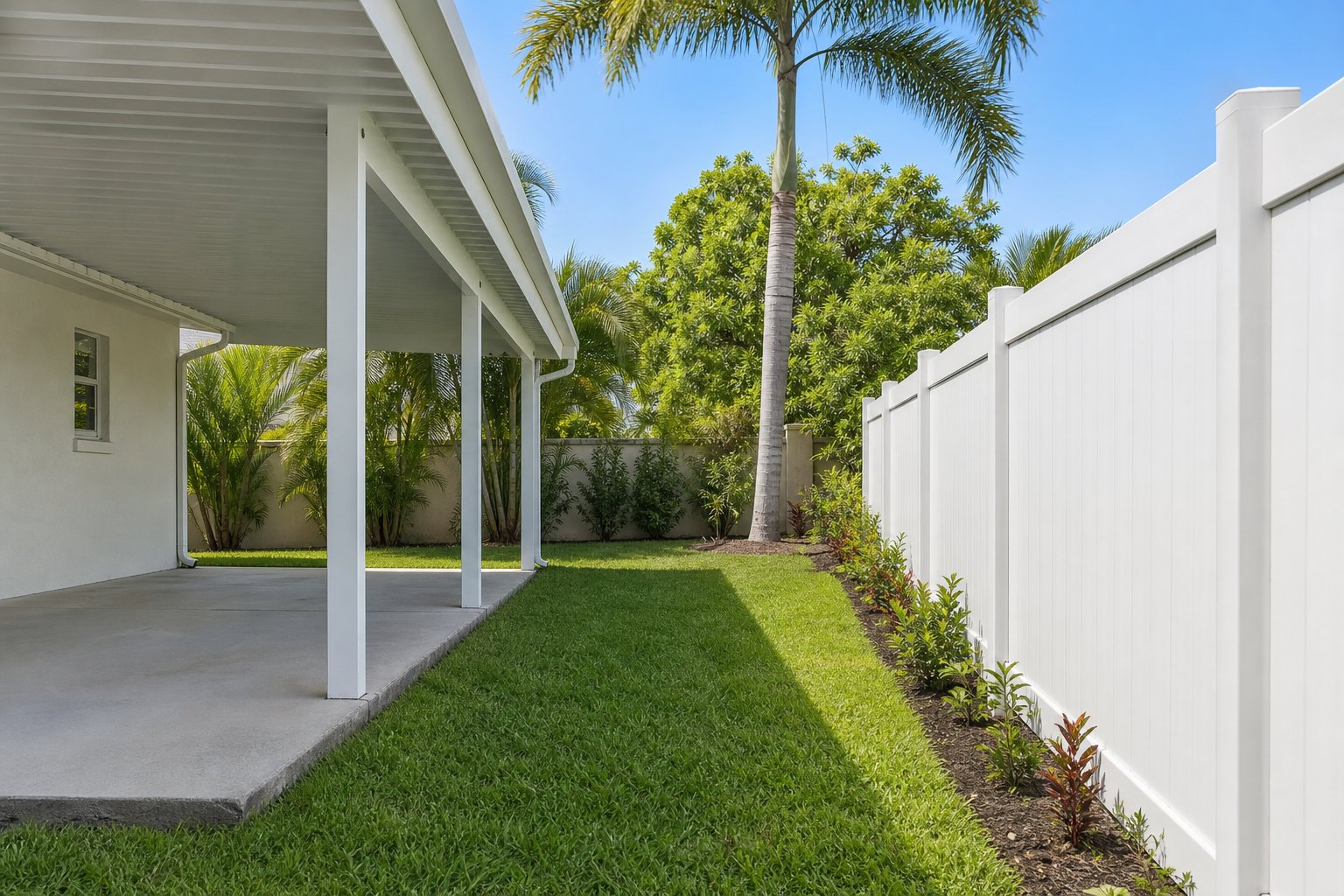
When homeowners in Pinellas, Pasco and Hernando counties start comparing quotes for a patio cover or carport, the material question comes up almost immediately: aluminum or vinyl? Both show up in Florida yards, both are marketed as low-maintenance, and both can look nearly identical in a glossy brochure photo. The way they actually hold up under Gulf Coast sun, salt air and wind is a different story.
What each material actually is
"Aluminum" patio covers and carports in Florida are almost always structural extruded aluminum framing: posts, beams and roof panels engineered as a load-bearing assembly and rated under a specific Florida product approval or Miami-Dade Notice of Acceptance for wind resistance. The metal itself does not rot or rust, and it is light enough to span a patio without the heavy footings steel would need.
"Vinyl" structures used for covers are typically PVC-based components, often supporting a separate roof system (aluminum, polycarbonate panels, or a fabric awning) rather than serving as the primary structural frame in wind-rated assemblies. Vinyl is more commonly the material of choice for fencing, railings and non-structural trim than for a wind-rated, permitted roof structure. That distinction matters more than the marketing suggests: if a cover needs to be engineered against uplift and attached to your home, the framing material has to carry a product approval for that exact use, and that is where aluminum has the long track record in this market.
Sun and heat exposure
Florida sun is relentless on any exterior material, but the two respond differently. Aluminum framing does not soften, warp or become brittle from UV exposure. Its finish (typically a baked-on powder coat) is what ages, and a quality powder coat is built to resist chalking and fading for many years before it needs attention. Vinyl components can become more brittle over time with sustained UV exposure, and darker vinyl colors absorb more heat, which can accelerate that process. This is a bigger factor for vinyl fencing or trim sitting in full sun year-round than it is for a shaded structural application, but it is part of why vinyl is rarely the primary framing choice for permitted, wind-rated patio covers here.
Salt air and coastal corrosion
Within a few miles of the Gulf, salt-laden air accelerates corrosion on almost everything metal. Aluminum itself resists rust, but it is not immune to every failure mode in this environment: galvanic corrosion can occur where aluminum is in direct contact with a dissimilar metal (steel fasteners, for example) in the presence of salt moisture. That is a fastener and hardware selection issue, not a reason to avoid aluminum, and it is exactly why the connection details on a quote matter as much as the panel itself. Vinyl does not corrode, which is a genuine advantage for non-structural coastal applications like fencing, but it does not solve the structural engineering requirement that a patio cover or carport has to meet for wind resistance.
Wind performance
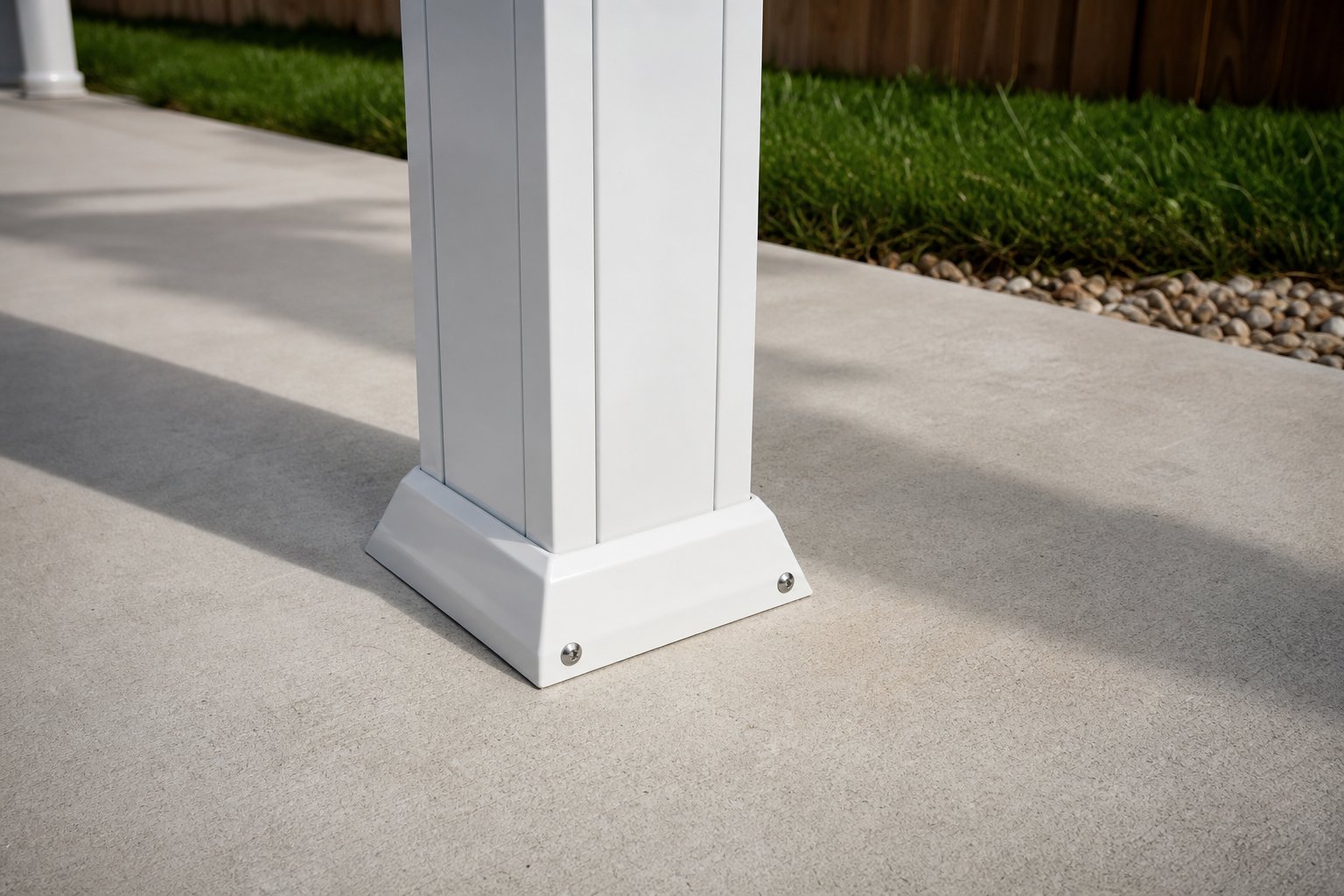
This is the deciding factor for most Florida homeowners. A patio cover or carport attached to a home has to be permitted and engineered against uplift for the local wind speed zone, and the approved product has to carry a specific rating for its configuration, including span, anchoring method, and panel type. Aluminum structural systems dominate this category in Florida because there is a deep, established track record of rated configurations, tested connections and long-span capability. If a vinyl-framed structure is being proposed as the primary load-bearing system for an attached, permitted cover, ask directly for the product approval number and the specific wind speed and configuration it covers. That is the same question you should ask about any structural product here, aluminum included.
Maintenance over the life of the structure
Both materials are marketed as low-maintenance, and both mostly deliver on that if installed correctly. For an aluminum cover: rinse off salt and debris a few times a year, keep drainage paths clear, and check fasteners at the wall connection and post bases annually for rust streaks or looseness. Vinyl components generally need less than that (mainly periodic cleaning), but they are also rarely doing the structural work in a wind-rated patio cover, so the comparison is not quite apples to apples once you separate "the roof structure over your patio" from "the fence around your yard."
Choosing based on what you are actually building
If the project is a patio cover, carport or screen enclosure roof that has to be permitted and engineered against Gulf Coast wind loads, aluminum framing is the material with the established rated configurations and long-span track record in this market. If the project includes fencing, railings or trim around the same outdoor space, vinyl is a reasonable, low-maintenance choice for those non-structural elements. Most Florida backyards end up using both, each where it performs best, rather than picking one material for the whole project.
What about screen enclosures?
Screen rooms and lanai enclosures raise the same question in a slightly different form, since the screen frame itself is almost always aluminum, while vinyl or acrylic panels sometimes replace screen mesh in a "screen room to sunroom" conversion. In that case the aluminum is still doing the structural work, holding the frame together and carrying wind load, while the vinyl or acrylic is filling the panel space rather than framing it. It is the same division of labor as a patio cover: aluminum where load-bearing strength matters, other materials where they do their job well without needing to be structural.
Not sure which combination makes sense for your yard? Request a quote here and we can walk through the options for your specific space.
Planning a residential improvement?
Share your project goals with Daly Aluminum and request an estimate conversation for your Florida home.
REQUEST AN ESTIMATE