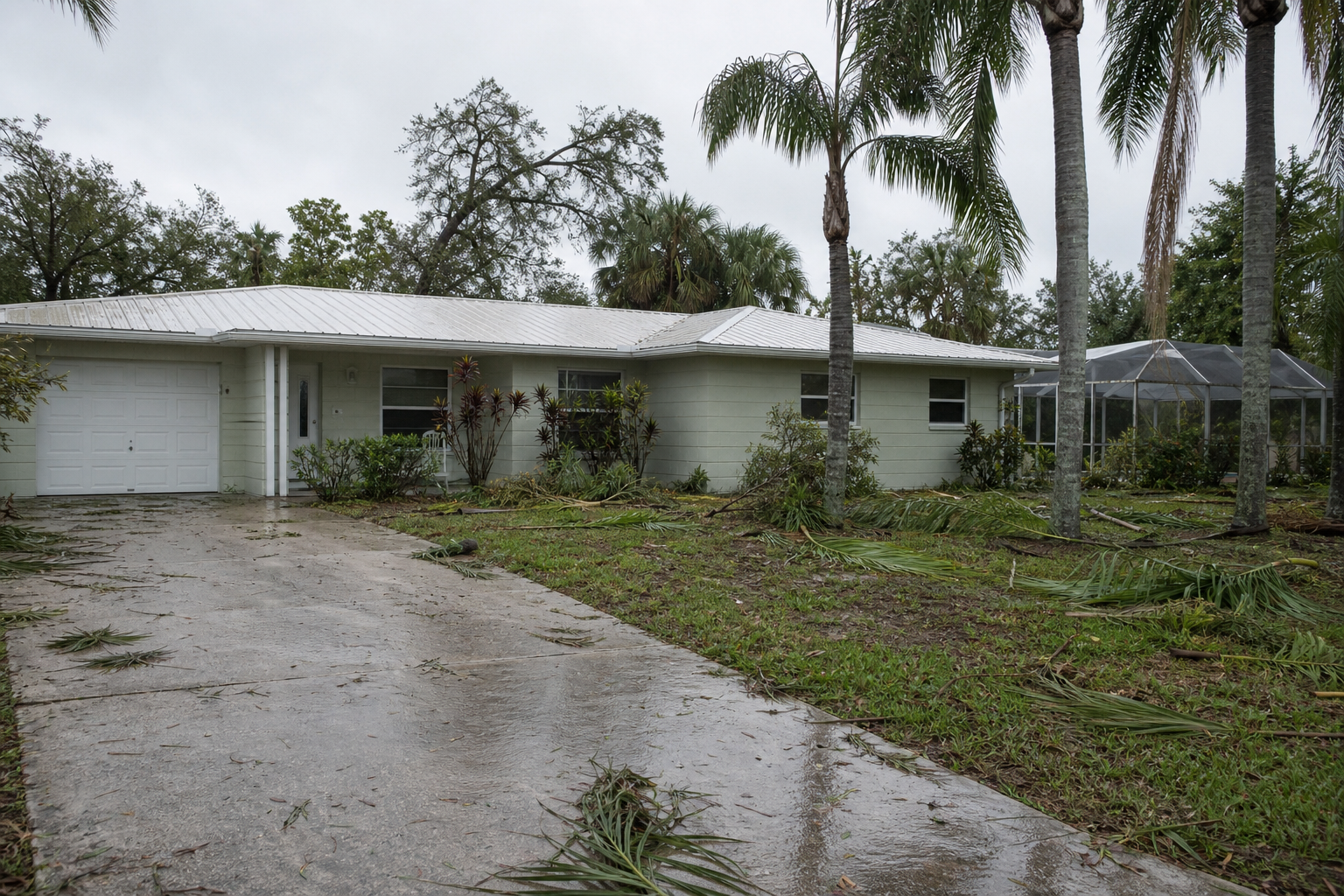
After the Storm: How to Check Your Windows, Doors and Screen Enclosure for Damage
The Atlantic hurricane season runs from June 1 through November 30, and its statistical peak falls in early September. That means the weeks right now are the ones most likely to send a storm across the Gulf Coast — and the ones when Pinellas, Pasco and Hernando homeowners are most likely to walk outside afterward and wonder how much damage they are actually looking at.
Most storm damage to windows, doors and enclosures is not dramatic. A blown-out window is obvious. A door that has shifted a quarter inch in its frame, a screen enclosure with a bent beam, or a sliding door track packed with grit is not — and those are the problems that quietly turn into water intrusion, mold and much bigger repair bills a year later. Here is a practical walk-through for checking your own home once conditions are safe.
Start outside, from a distance
Before you touch anything, stand back and look at the whole elevation of the house. You are looking for lines that are no longer straight: a screen enclosure whose top rail sags, a carport post that leans, an awning that has pulled away from the wall, a window frame that no longer sits square in its opening. Wind loads twist structures, and the twist is easier to see from twenty feet away than from two.
Photograph everything before you clean up or move anything. If you end up filing an insurance claim, the photos taken before cleanup are the ones that carry weight. Date-stamped images from your phone, wide shots plus close-ups, are enough.
Windows: look for the small stuff
Whole-pane failures are rare in Florida homes with modern impact glass. What you are hunting for is subtler:
- Chips, stars and edge cracks. Impact glass is laminated, so it can take a hit and hold together while still being compromised. A pane that has cracked but stayed in place is still doing its job today, but its rated performance is gone. It should be replaced before the next storm.
- Cloudiness or moisture between panes. On insulated units, fog between the glass means the seal has failed. Storm pressure and flexing can break a seal that was already tired.
- Failed caulk and sealant. Run a finger along the perimeter where the frame meets the wall. Anything crumbly, split or pulling away is now a water path.
- Operation. Open and close every window. A sash that suddenly binds usually means the frame has moved or debris is lodged in the track.
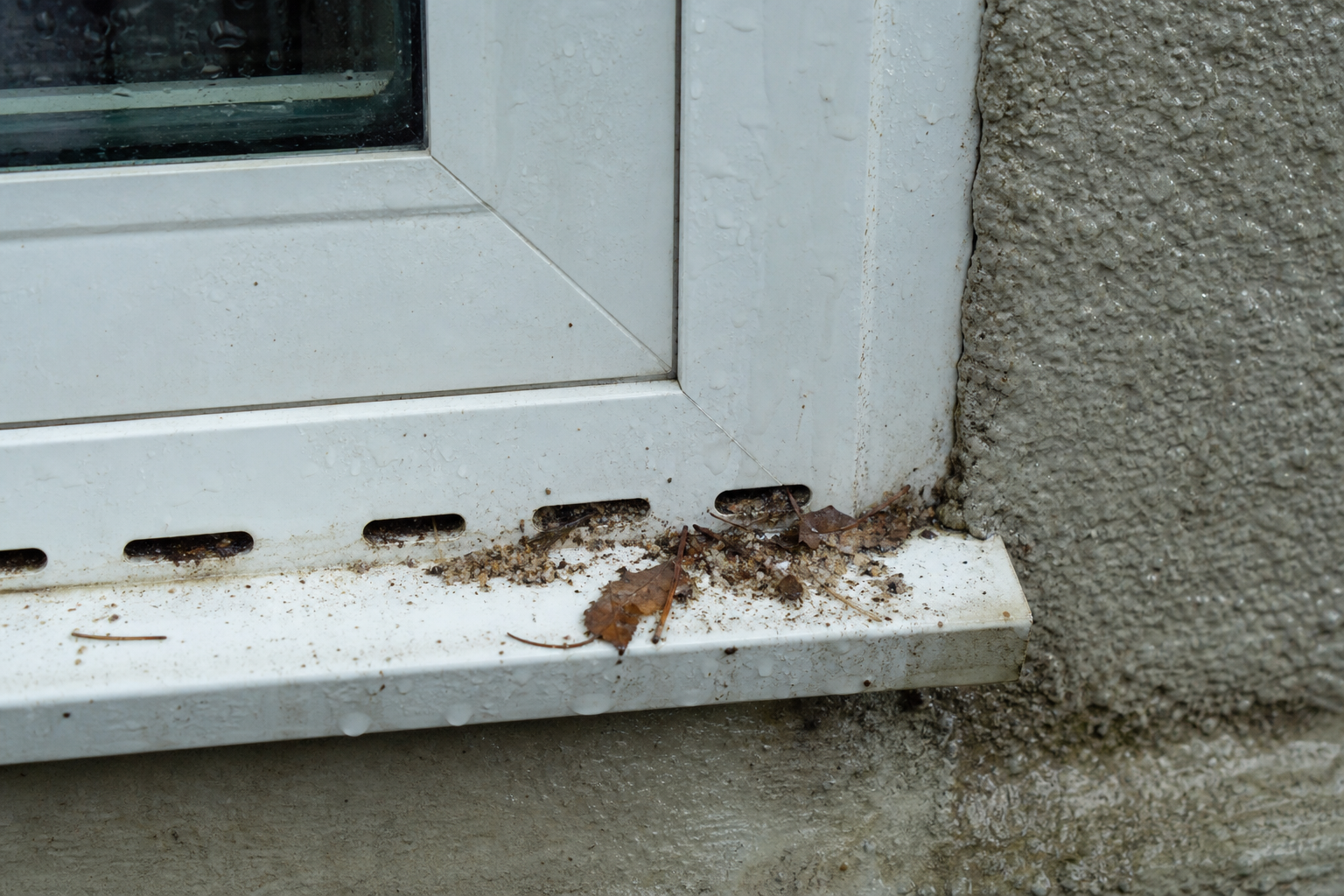
- Weep holes. Those small slots along the bottom of the frame drain water back outside. Storms pack them with sand, leaves and pine needles. Blocked weeps push water inward, into the wall, and that is one of the most common sources of post-storm damage in Gulf Coast homes.
Doors and sliders
Entry doors and sliding glass doors take a different kind of beating. Check that the door still latches without lifting or pushing, that the weatherstripping is intact all the way around, and that the threshold has not lifted at either end. On sliders, clear the bottom track completely and then roll the panel end to end; grinding or a panel that jumps usually means damaged rollers or a track that has been bent by debris.
Look at the interior side too. Stains or bubbling on the drywall above or beside a door, a swollen baseboard, or a floor that feels soft near the threshold all point to water that already got in. Those signs almost never appear on the day of the storm — they show up a week or two later, which is exactly why a follow-up inspection matters.
Screen rooms, lanais and pool enclosures
Aluminum enclosures are engineered to take wind, but they are also the part of the house most exposed to it. After a storm, check for bowed or twisted beams, screws that have backed out at the connections, anchors pulling loose from the deck or the wall, and panels of screen that have blown out or stretched. A screen that tore is doing what it is supposed to do — releasing pressure — but the frame around it still needs to be checked, because a released panel means the frame took a load.
Do not judge an enclosure by whether it is standing. Judge it by whether the connections are still tight. A structure with loosened anchors will look completely fine right up until the next storm.
Carports, awnings and patio covers
Walk the perimeter of any attached cover and look at where it meets the house. The wall connection is the failure point that matters. Rust streaks, gaps, popped fasteners, or a ledger board that has separated even slightly from the wall all mean the connection needs professional attention. Also check the pitch: standing water on a cover after the rain stops means the structure has settled or deflected.
What to document for insurance
If damage is significant, build a simple record before repairs start: wide photos of each elevation, close photos of each damaged component, a written list of what you found and where, and any receipts for emergency work such as boarding up an opening. Keep the damaged parts if you can. Adjusters respond to specifics, and a homeowner who can point to a cracked laminate pane in a named room with a photo taken the day after the storm is in a far stronger position than one working from memory.
Repair, or replace?
Some post-storm work is genuinely a repair: new weatherstripping, new rollers, resealing a perimeter, rescreening a panel, clearing weep holes. Other findings are a signal that a component has reached the end of its service life. Older aluminum single-pane windows that were already leaking, a slider that has been fighting you for years, or an enclosure with corrosion at multiple connections are all cases where repeated repairs cost more over five years than replacing the unit once with a current, code-approved product.
The honest test is simple: if the same component has needed attention after each of the last two storms, it is telling you something.
Do the walk-through even if nothing looks wrong
The most expensive storm damage in Pasco, Pinellas and Hernando homes is usually the damage nobody looked for. A blocked weep hole costs nothing to clear and thousands to ignore. Spend an hour after the next system passes, work through the list above, and write down what you find.
If something on that list looks questionable and you would rather have a second set of eyes on it, request a quote or service visit here and we will take a look.